A wiped surface is only clean for a moment. In hospitals, cleanrooms, ambulances and production spaces, recontamination starts as soon as people move, equipment returns, or air currents carry particulates back onto high-touch areas. That is why far uvc surface decontamination is attracting serious attention from teams that need more than periodic manual cleaning. The value is not simply microbial reduction. It is continuous contamination control in environments where stopping activity is either costly or impossible.
Far-UVC at 222 nm is being evaluated and deployed because it addresses a long-standing operational gap. Conventional cleaning remains essential, but it is intermittent and labour dependent. Room-turnover technologies can be effective, yet many require unoccupied spaces and create workflow interruptions. Far-UVC changes the equation by enabling ongoing decontamination of exposed surfaces during normal operations, provided the system is correctly designed, validated and installed for the intended setting.
What Far-UVC surface decontamination actually does
Far-UVC surface decontamination refers to the use of 222 nm light to reduce microbial burden on exposed environmental surfaces. In practical terms, this means continuously treating the areas that are most likely to accumulate contamination between manual cleaning cycles, such as worktops, bed rails, transfer points, pass-through zones, device staging areas and touch-adjacent surfaces.
The mechanism matters. Far-UVC light inactivates microorganisms by damaging nucleic acids and preventing replication. At 222 nm, the wavelength has distinct optical properties that make it highly relevant for occupied spaces when systems are engineered within applicable exposure limits. For professional buyers, the key point is not novelty. It is the ability to create a persistent layer of decontamination that sits between manual interventions and helps suppress bioburden over time.
This does not mean every surface receives the same effect. Line of sight, surface geometry, distance, shadowing and dose all influence performance. A flat stainless-steel counter beneath a correctly positioned fixture is a very different case from the underside of equipment or a recessed handle. Any serious implementation must start with that physical reality.
Why intermittent cleaning is not enough in critical settings
Most hygiene-critical environments already have documented cleaning protocols, trained staff and audited procedures. Yet contamination persists because the risk is dynamic. Surfaces are touched, aerosols settle, carts move between zones, and materials enter and exit controlled spaces throughout the day.
In healthcare, this creates obvious pressure around high-contact surfaces and shared equipment. In ambulances, space constraints and rapid turnaround compress the time available for manual decontamination. In cleanrooms and pharmaceutical settings, personnel movement and material transfer can reintroduce contamination even where procedures are tightly controlled. The issue is not whether manual cleaning works. It does. The issue is that it cannot provide constant control between events.
Far-UVC is valuable precisely because it can operate alongside normal activity. That continuity is commercially significant. It reduces dependence on stop-start interventions and supports microbial control without requiring rooms, corridors or workstations to be taken out of use.
Where Far-UVC delivers the strongest operational value
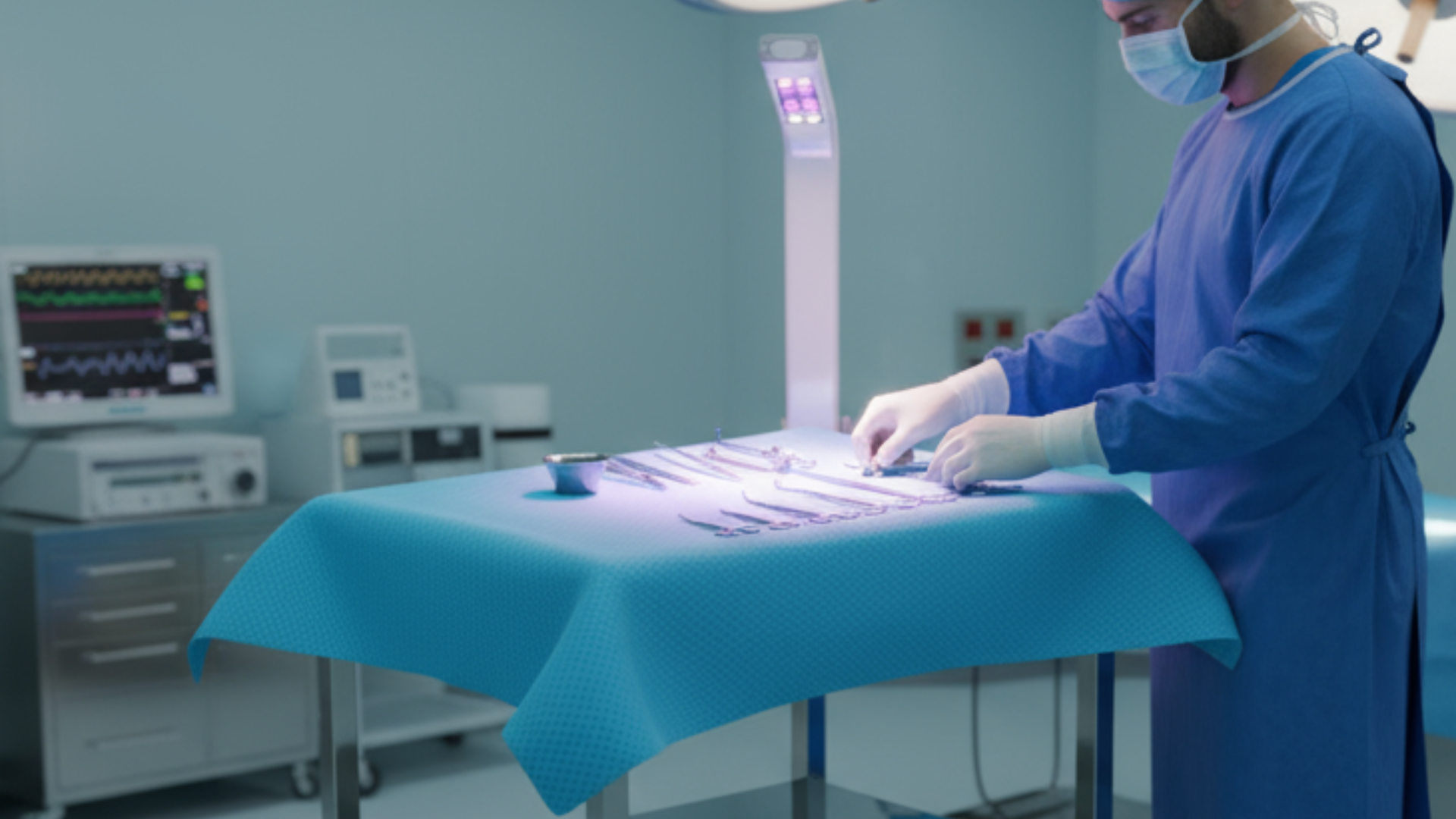
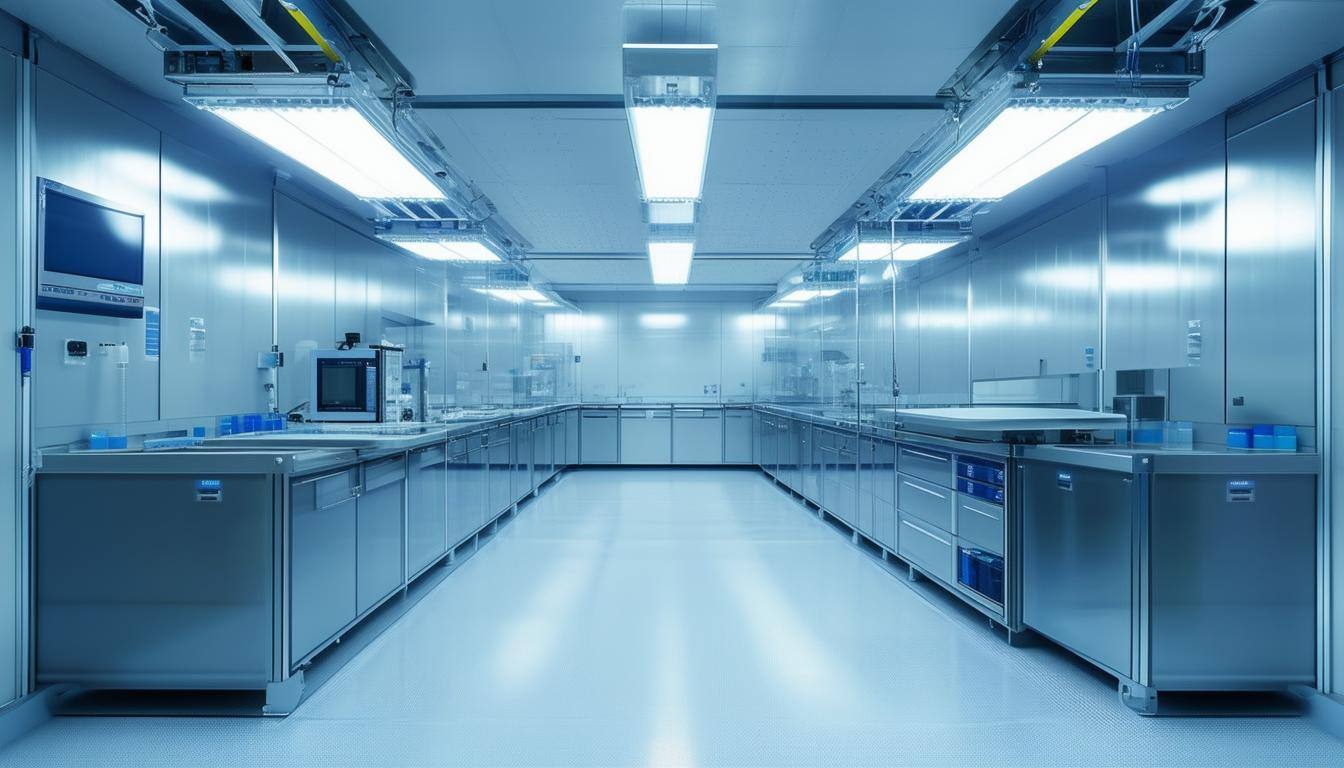
The best applications are those where exposed surfaces are repeatedly recontaminated and where uptime matters. In patient care environments, continuous decontamination can support infection prevention by reducing microbial load on exposed touch-adjacent areas throughout the day. In ambulance interiors, it can help manage contamination pressure between calls without adding friction to fleet operations. In cleanroom gowning and transfer workflows, it can add an extra decontamination layer around entry, staging and material movement.
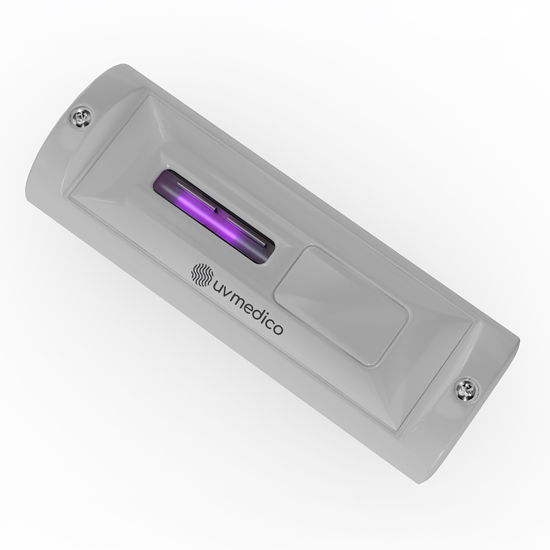
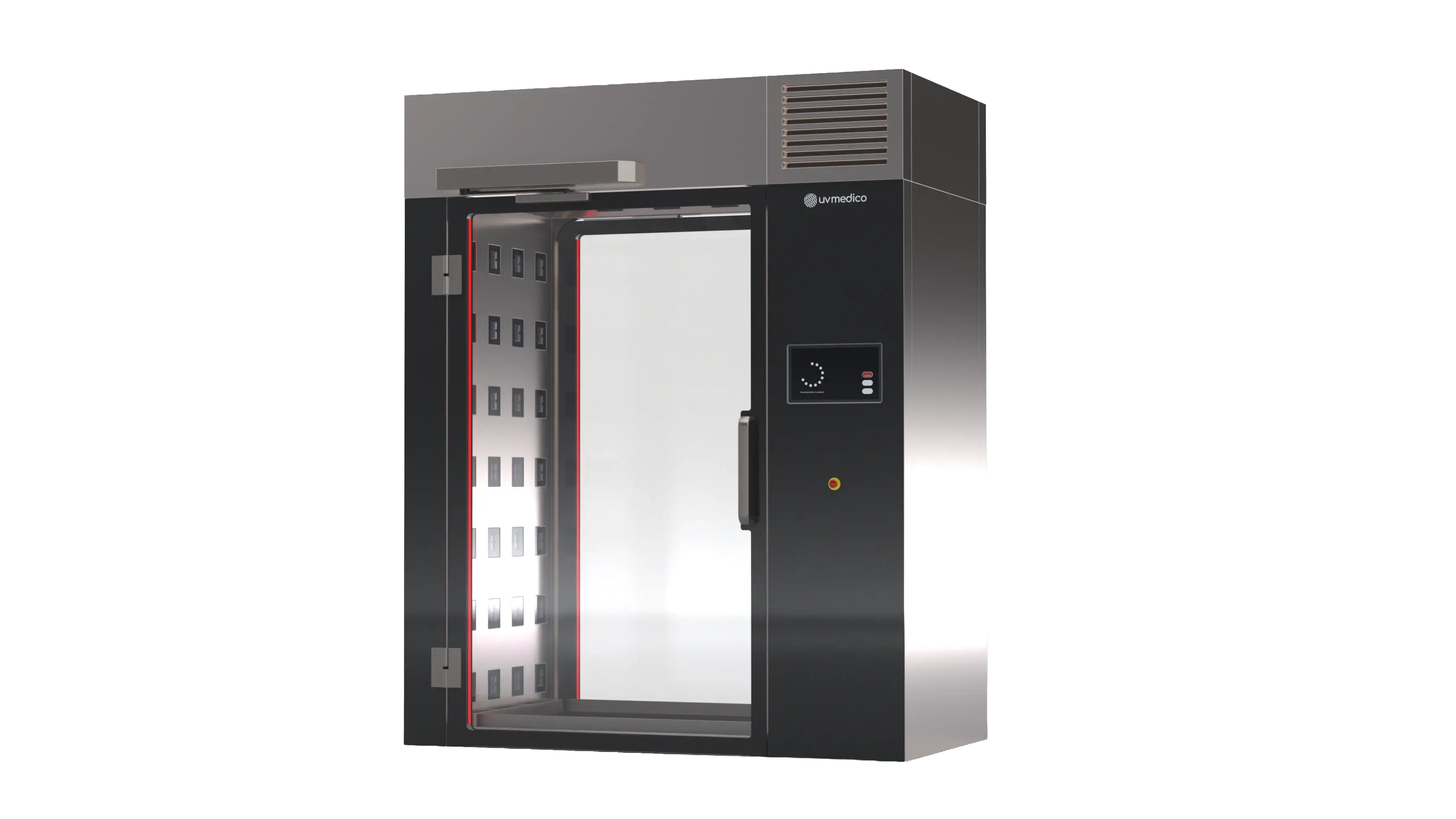
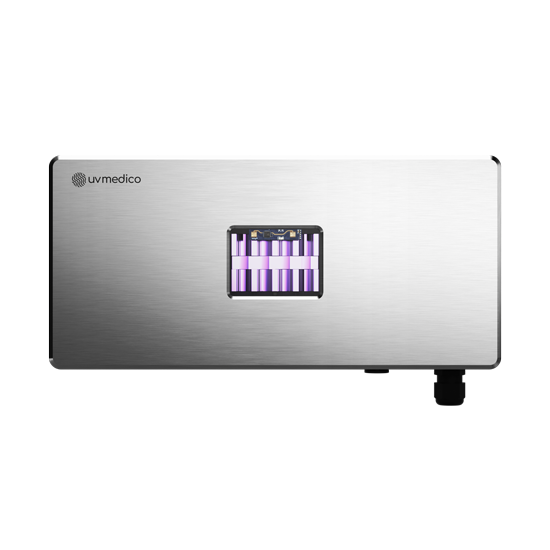
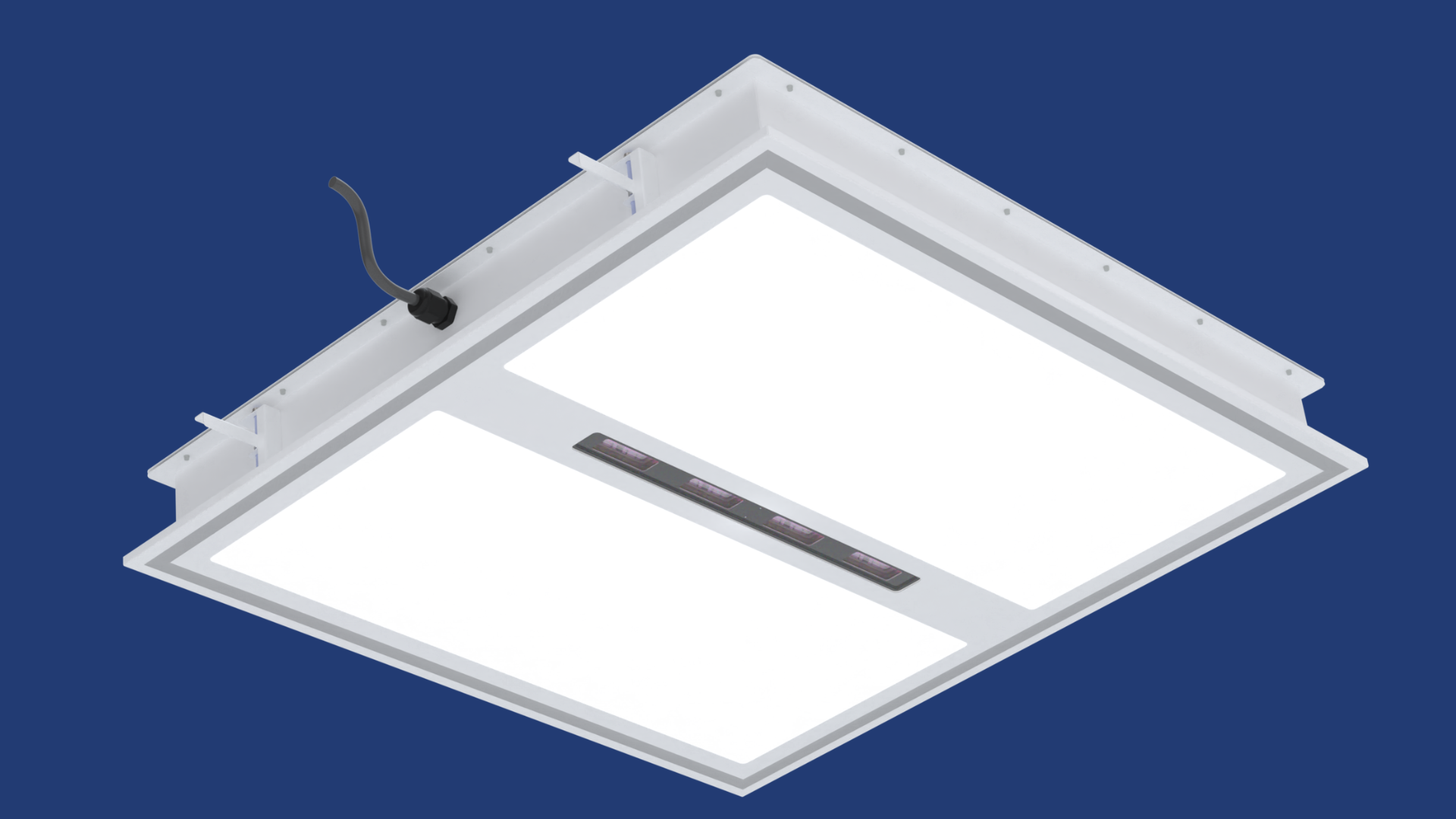
Industrial and life-science settings also benefit when contamination control must be maintained without slowing personnel flow. A well-designed Far-UVC installation can be integrated into downlights, linear systems, pendants or enclosed application-specific units so that decontamination becomes part of the environment rather than a separate event.
That integration point is often underestimated. Buyers are not simply purchasing a lamp. They are specifying a control measure that must fit architecture, occupancy, compliance requirements and operational patterns.
Far-UVC surface decontamination and system design
Effective results depend on engineering discipline. The same wavelength can perform very differently depending on fixture design, optical control, mounting height, irradiance distribution and environmental conditions. This is why generic assumptions about coverage are risky.
For surface decontamination, design begins with the target zone. Which surfaces require continuous treatment? How often are they recontaminated? What is the dwell time of people nearby? Are there obstructions or reflective materials? What microbial reduction target is realistic within the available geometry and operating hours?
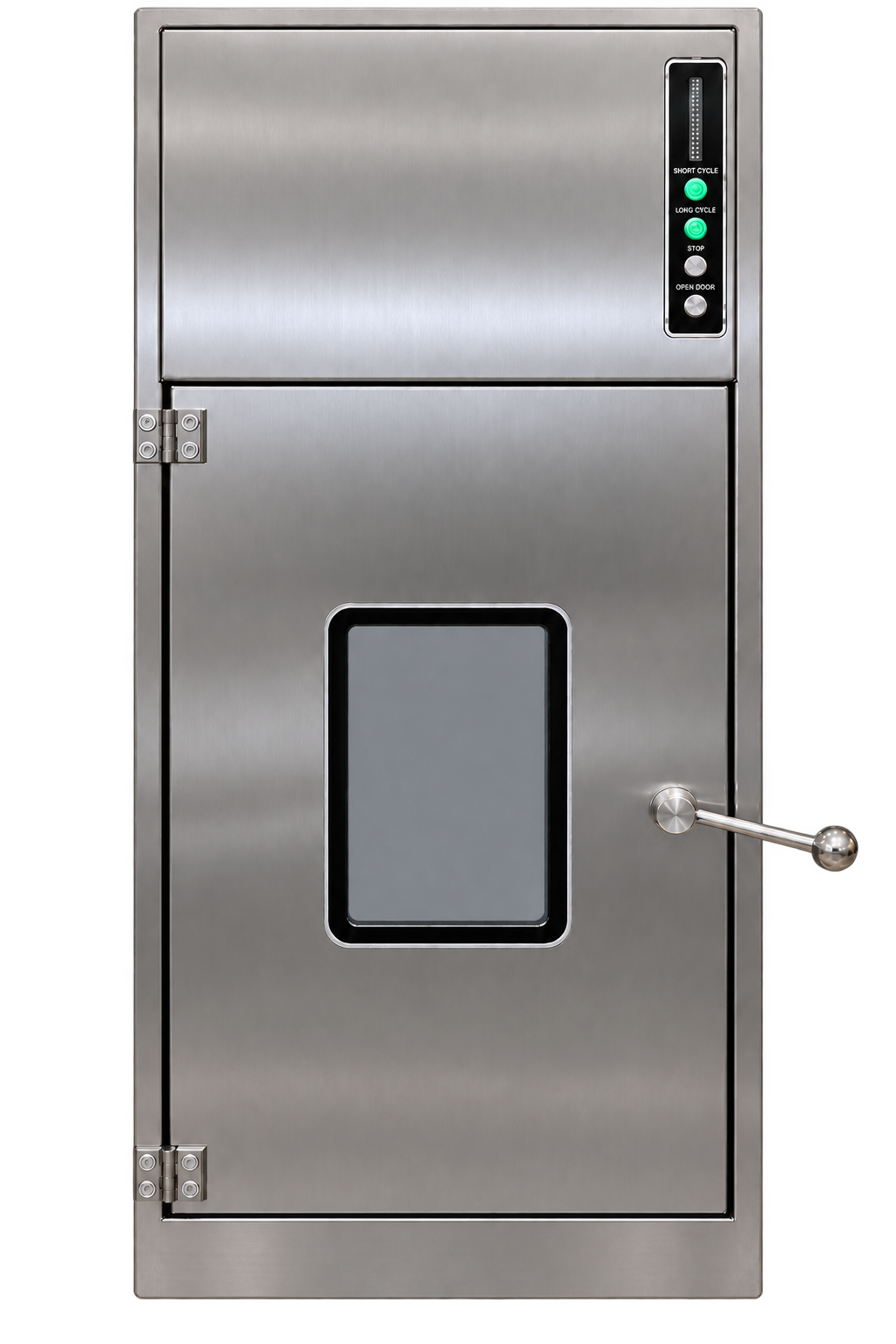
These questions shape the system architecture. In some spaces, overhead fixtures can maintain useful coverage across exposed work surfaces. In others, pendants, linear arrangements or application-specific units are more appropriate. In transfer and gowning areas, step-on units or material airlock solutions may be preferable because they target contamination at workflow bottlenecks rather than trying to treat an entire room uniformly.
The trade-off is straightforward. Broad environmental coverage can support general contamination control, while targeted systems can achieve stronger effect in defined locations. The right answer depends on the use case, not a catalogue claim.
Safety, compliance and occupied-space use
For regulated buyers, safety is not a secondary discussion. It is the first one. Far-UVC is compelling because 222 nm technology is being developed for people-compatible use in occupied settings, but that does not remove the need for rigorous compliance-led implementation.
Exposure limits, fixture performance, installation geometry and cumulative dose all matter. So does the difference between a controlled laboratory setup and a real operating environment. Procurement teams, infection prevention leads and facilities managers should expect clear documentation around system design, exposure modelling, intended use and maintenance requirements.
This is also where application-specific manufacturers stand apart from generic UV suppliers. Occupied-space decontamination in critical environments demands more than a source of light. It requires a documented system approach supported by validation, training and realistic deployment criteria.
What buyers should evaluate before specifying a system
The first test is whether the supplier understands the operational environment. A hospital isolation area, a cleanroom entrance, an ambulance cabin and a logistics transfer point each present different decontamination challenges. If the proposed solution looks identical in every setting, the design process is probably too shallow.
The second test is whether performance claims are connected to real installation conditions. Ask how the system handles shadowing, surface distance, occupancy patterns and cleaning compatibility. Ask what exposed surfaces are expected to benefit most, and where performance will be limited. Serious suppliers are comfortable discussing constraints because that is how credible systems are built.
The third test is whether the solution supports workflow continuity. In many sectors, the operational case is as important as the microbiological one. If a technology adds delays, room downtime or staff burden, adoption will suffer even if the underlying science is sound.
Why Far-UVC is not a replacement for cleaning
Far-UVC surface decontamination should be viewed as an additional control layer, not a substitute for established hygiene practices. Manual cleaning removes soils and residues that light cannot penetrate. Terminal decontamination procedures still have a place. Existing environmental monitoring and quality systems remain necessary.
The advantage of Far-UVC is that it strengthens the interval between those activities. It helps keep exposed surfaces under continuous decontamination pressure, which can reduce the extent to which microbial burden rebuilds during active use. In practice, that means better support for infection prevention goals, improved environmental control and fewer compromises between hygiene and uptime.
That layered approach is where the technology makes the most sense. High-stakes environments rarely depend on a single intervention. They depend on complementary controls that together reduce risk more reliably than any one measure alone.
The strategic case for continuous decontamination
There is a broader shift under way in hygiene-critical environments. Buyers are moving from event-based response to continuous control. Instead of relying solely on scheduled cleaning, they are looking for engineered measures that operate in the background and support safer daily conditions.
Far-UVC fits that direction because it aligns microbiological performance with operational continuity. It allows organisations to address surface contamination in occupied settings without repeatedly pausing care delivery, production activity or personnel movement. For decision-makers measured on both safety and throughput, that combination matters.
The most effective deployments will come from organisations that treat Far-UVC as part of a designed contamination-control strategy rather than a standalone device purchase. When the technology is matched to the environment, validated against the use case and integrated with existing protocols, it can move surface decontamination from an intermittent task to a continuous capability.
That is the practical promise here: not a shortcut, but a more resilient way to maintain cleaner operating conditions while the real work of care, manufacturing and emergency response carries on.
.png)
.png)

.png)
.png)


.png)


 Insights
 Science
 Compliance
.jpg)



.jpg)