A single coughing patient in a waiting area can change the risk profile of an entire clinical zone within minutes. That is why hospital airborne infection control cannot be treated as a ventilation-only issue or a cleaning issue pushed to the end of a shift. In acute care settings, airborne contamination moves with people, procedures and pressure differentials, which means control measures must operate continuously and within real clinical workflows.
For hospital leaders, infection prevention teams and estates professionals, the challenge is not simply choosing another technology. It is deciding how to reduce airborne transmission risk in occupied spaces without adding friction to patient care, theatre turnover, staff movement or compliance management. The most effective strategies now combine engineered airflow, source control, room-specific protocols and continuous decontamination technologies that function while spaces remain in use.
Why hospital airborne infection control has changed
Traditional infection prevention models were built around a sensible hierarchy: ventilation, filtration, isolation, PPE, cleaning and procedural controls. Those remain essential. But they do not always close the gap between theoretical air quality performance and what happens on a live ward, in an emergency department corridor or during patient transfer.
Airborne risk is dynamic. It changes with occupancy density, aerosol-generating activities, door openings, bed movements and delays between contamination events and environmental intervention. A room can meet design criteria on paper and still experience elevated exposure risk during peak use. That matters in hospitals because vulnerable patients, time-critical workflows and mixed-acuity environments rarely allow ideal operating conditions for long.
This is where many procurement decisions become too narrow. Focusing only on air changes per hour can overlook how contamination behaves between ventilation cycles. Relying only on terminal cleaning ignores the fact that airborne pathogens are a live operational problem, not just a post-event housekeeping problem. Hospital airborne infection control now needs to be considered as a continuous contamination control question.
The limits of relying on ventilation alone
Ventilation is foundational, but it is not universally sufficient. In older estates, HVAC performance may vary significantly across buildings and care areas. Even in newer facilities, ventilation effectiveness depends on maintenance quality, airflow balancing, occupancy and how a room is actually used.
High air exchange rates can reduce airborne particle concentration, but they do not necessarily provide immediate control at the point and moment of release. Filtration improves recirculated air quality, yet it still depends on contaminated air being captured and processed through the system. In crowded clinical environments, that time lag matters.
There is also a practical constraint. Increasing mechanical ventilation capacity is expensive, disruptive and often slow to implement. Retrofitting ductwork, altering pressure regimes or upgrading plant can involve capital works that are difficult to justify across an entire hospital estate. For many facilities managers, the real question is how to strengthen airborne control in occupied spaces without rebuilding infrastructure.
What effective airborne control looks like in practice
An effective strategy is layered. It starts with zoning risk correctly. Isolation rooms, operating theatres, emergency departments, imaging suites, reception areas, staff rooms and ambulances do not carry the same contamination profile, so they should not be treated as though they do.
In high-risk and high-throughput areas, the aim should be to reduce viable airborne bioburden continuously, not intermittently. That distinction is operationally significant. Intermittent measures can leave untreated gaps. Continuous measures help address the periods that are hardest to control - the minutes between one patient leaving and the next arriving, the overlap between staff interactions, or the periods when environmental services are not present.
The strongest frameworks therefore combine HVAC and filtration with technologies that actively decontaminate air in occupied rooms. This is where Far-UVC has become increasingly relevant for healthcare environments seeking performance without workflow interruption.
Where Far-UVC fits into hospital airborne infection control
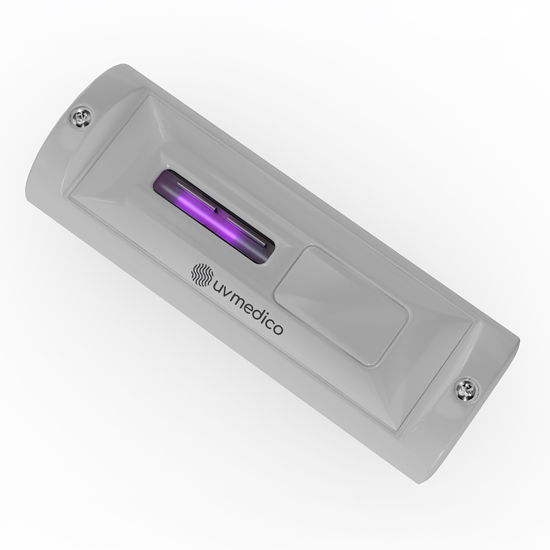
Far-UVC at 222 nm is attracting attention because it offers a different implementation model from conventional upper-room systems or manual room-based interventions. In the right engineered format, it can support continuous decontamination in occupied healthcare settings, helping to reduce airborne microbial load without requiring staff to vacate the area.
That matters because operational continuity is not a soft benefit. In hospitals, every infection prevention measure is judged not only by microbial reduction but by whether it can be sustained during real clinical activity. If a system demands room closure, scheduling workarounds or frequent manual intervention, compliance and consistency usually degrade over time.
Far-UVC changes that equation when deployed with appropriate validation, dosimetry and product design. Instead of functioning as an occasional intervention, it can become part of the background environmental control architecture. For infection prevention leaders, this supports a shift from episodic response to persistent risk reduction.
There is, however, an important caveat. Not all technologies presented under the broader UV category are equivalent, and hospital buyers should be wary of vague claims. Performance depends on wavelength, fixture engineering, exposure management, room geometry and evidence relevant to occupied use. In regulated environments, the question is not whether a technology sounds innovative. It is whether it is validated, safe and deployable within compliance boundaries.
Priority hospital zones for continuous airborne decontamination
The case for continuous airborne control is strongest in spaces where occupancy is high, patient turnover is rapid or vulnerable individuals are concentrated. Emergency departments are an obvious example because patient pathways are unpredictable and isolation capacity is finite. Waiting areas and triage spaces often mix symptomatic and undifferentiated cases, creating sustained exposure opportunities.
Inpatient wards present a different challenge. Multi-bed bays, corridor traffic and shared staff movement can undermine the neat separation assumed by protocol. Even when surface hygiene standards are strong, airborne contamination can persist as an unmanaged variable.
Procedure rooms, recovery areas and imaging suites also deserve attention. These spaces may not always be classified as the highest airborne risk zones, yet they often handle repeated patient throughput and involve short turnover windows. Adding a continuous decontamination layer can support cleaner environmental conditions without slowing schedules.
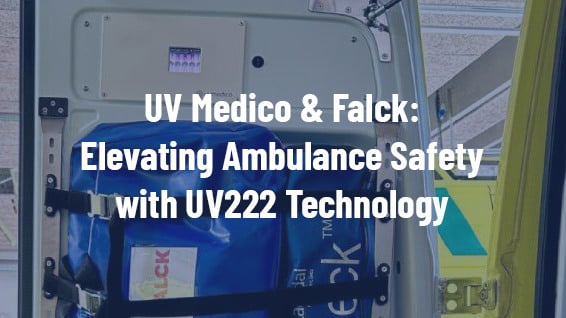
Ambulances and transfer environments are another critical link. Infection risk does not begin at the ward door. Patients, clinicians and equipment move through a chain of spaces, and control weaknesses in one segment can undermine the whole pathway.
Implementation decisions that separate good projects from poor ones
The most successful hospital deployments start with the environment, not the product catalogue. A fixture that performs well in one setting may be poorly matched to another if ceiling height, occupancy pattern, target pathogens or airflow dynamics differ. Application-specific design is therefore essential.
Procurement teams should ask practical questions early. What microbial reduction objective is realistic for the space? Will the system support occupied operation? How is safety documented? What evidence supports airborne rather than purely surface performance? How will the technology integrate with existing estates and infection prevention governance?
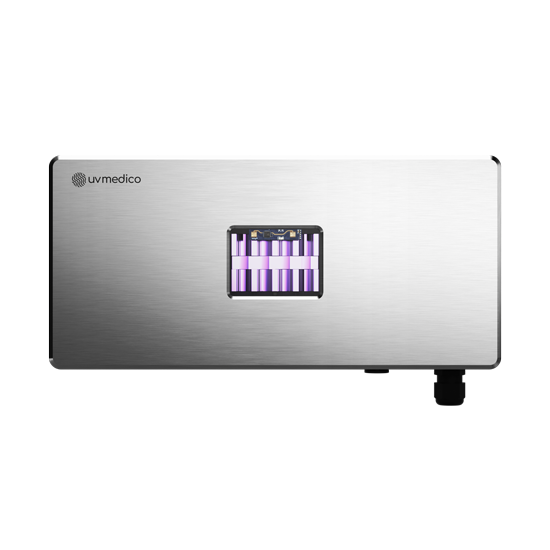
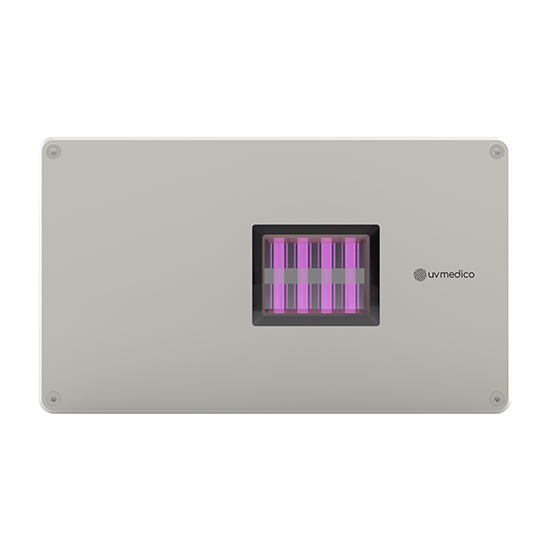
It is also worth assessing the operational burden. Systems that require intensive staff training, frequent repositioning or room shutdowns often struggle in busy hospitals. By contrast, engineered fixed-format solutions such as integrated fixtures, downlights, pendants or linear systems can be easier to standardise and manage across multiple areas.
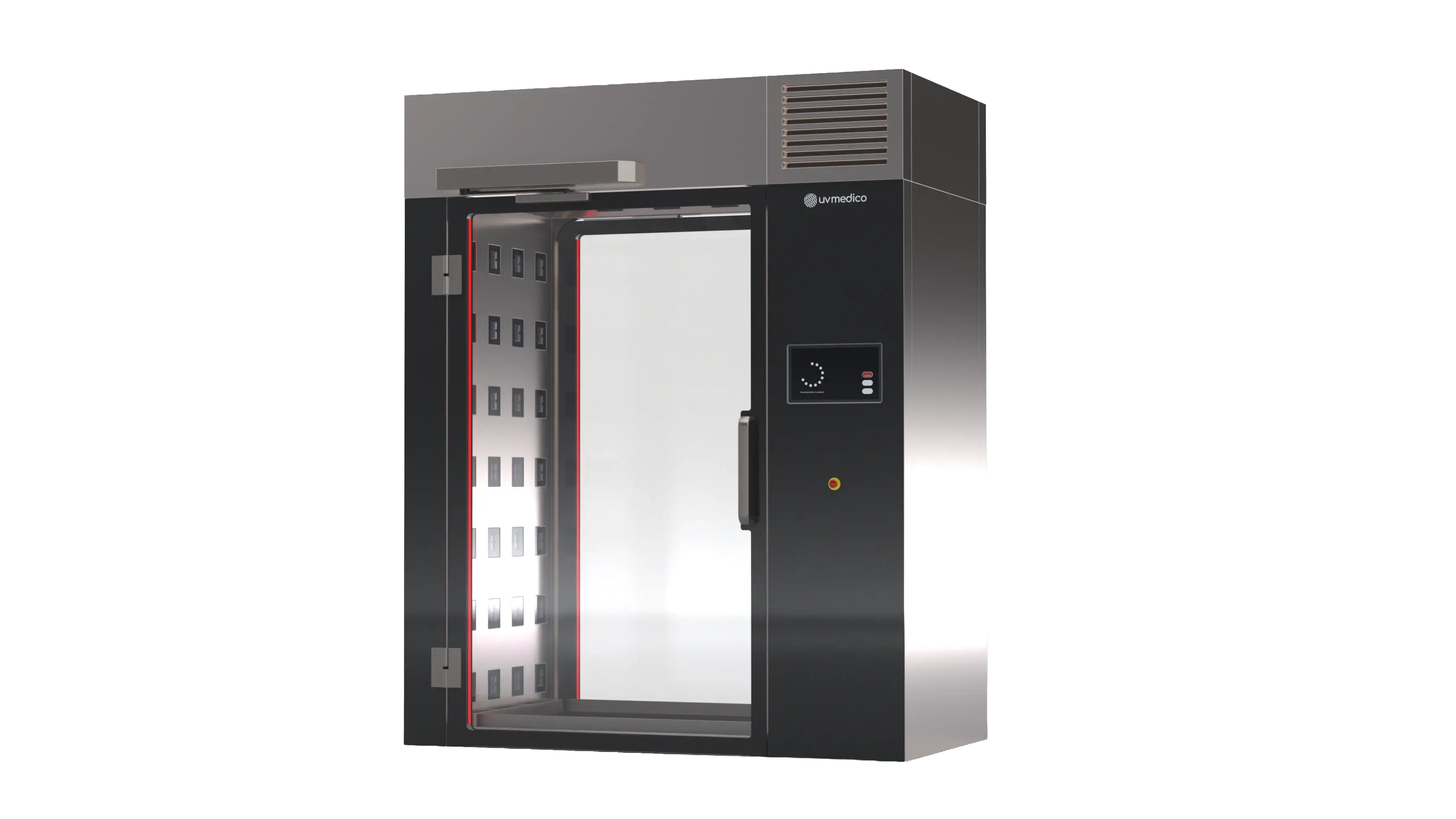
This is one reason specialist providers such as UV Medico have focused on productised Far-UVC formats for defined healthcare applications rather than generic equipment. In hospitals, standardisation, safety documentation and environment-specific design are often as important as the core technology itself.
The compliance and governance perspective
Hospital airborne infection control decisions increasingly sit at the intersection of infection prevention, estates, procurement and executive risk management. That means technical performance alone is not enough. Buyers need documentation, validation pathways and a clear understanding of how a system supports policy objectives.
From a governance perspective, continuous decontamination technologies are strongest when they complement existing controls rather than attempt to replace them. PPE remains necessary. Ventilation remains necessary. Cleaning remains necessary. The value lies in narrowing the control gaps those measures leave in day-to-day operation.
That layered position is often what makes approval easier. It aligns with how hospitals already manage risk - through redundancy, practical safeguards and measurable improvement rather than single-point reliance.
Hospitals do not need more infection prevention theory. They need airborne control measures that hold up during visiting hours, bed pressure, staff shortages and full clinical occupancy. The organisations that will lead on this issue are the ones willing to treat air as a continuously managed clinical asset, not an invisible background condition.
.png)
.png)

.png)
.png)


.png)


 Insights
 Science
 Compliance
 Cecilie Aaberg Meltofte : 19 Dec, 2024
.jpg)





.jpg)

.jpg)