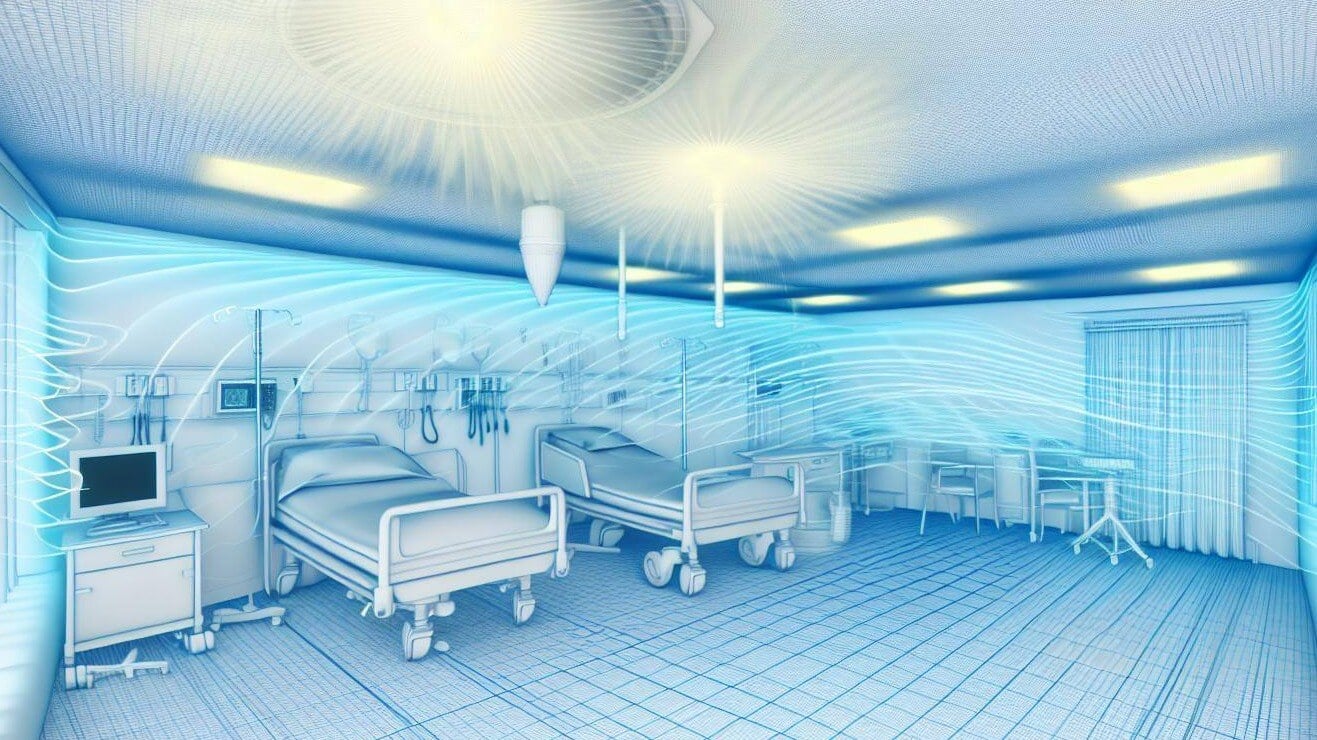
The conversation around Far-UVC often accelerates once a project moves beyond efficacy and into deployment. At that point, Far-UVC regulatory compliance stops being a background consideration and becomes the central design constraint. For hospitals, cleanrooms, ambulance operators and other hygiene-critical environments, the question is not simply whether 222 nm technology can reduce microbial burden. It is whether a system can do so continuously, in occupied spaces, within applicable safety limits, product requirements and site governance.
That distinction matters because compliance is not a single certificate or a one-off test report. It is the combined outcome of optical engineering, exposure control, installation design, environmental validation and operational documentation. Buyers who treat it as a late-stage procurement tick box tend to discover delays, redesigns or unacceptable use restrictions. Buyers who address it early are far more likely to implement Far-UVC in a way that supports infection prevention without interrupting clinical care or production flow.
What Far-UVC regulatory compliance actually covers
In practice, compliance sits across several layers. The first is photobiological safety - particularly human exposure to 222 nm radiation in occupied environments. The second is electrical and product safety, which governs the fixture or integrated system itself. The third is application-level compliance, where the installation must suit the room geometry, occupancy pattern, maintenance regime and intended decontamination objective.
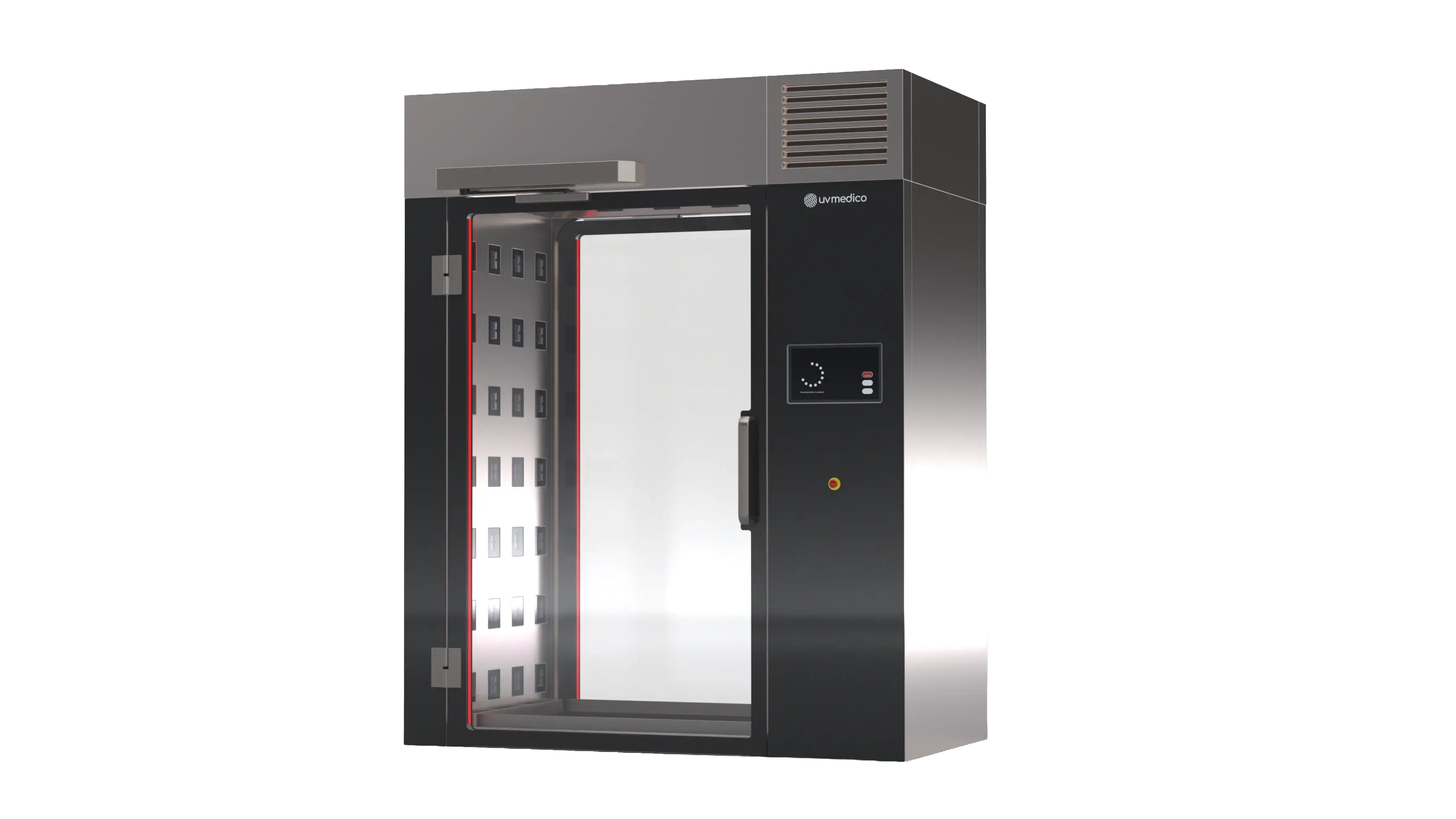
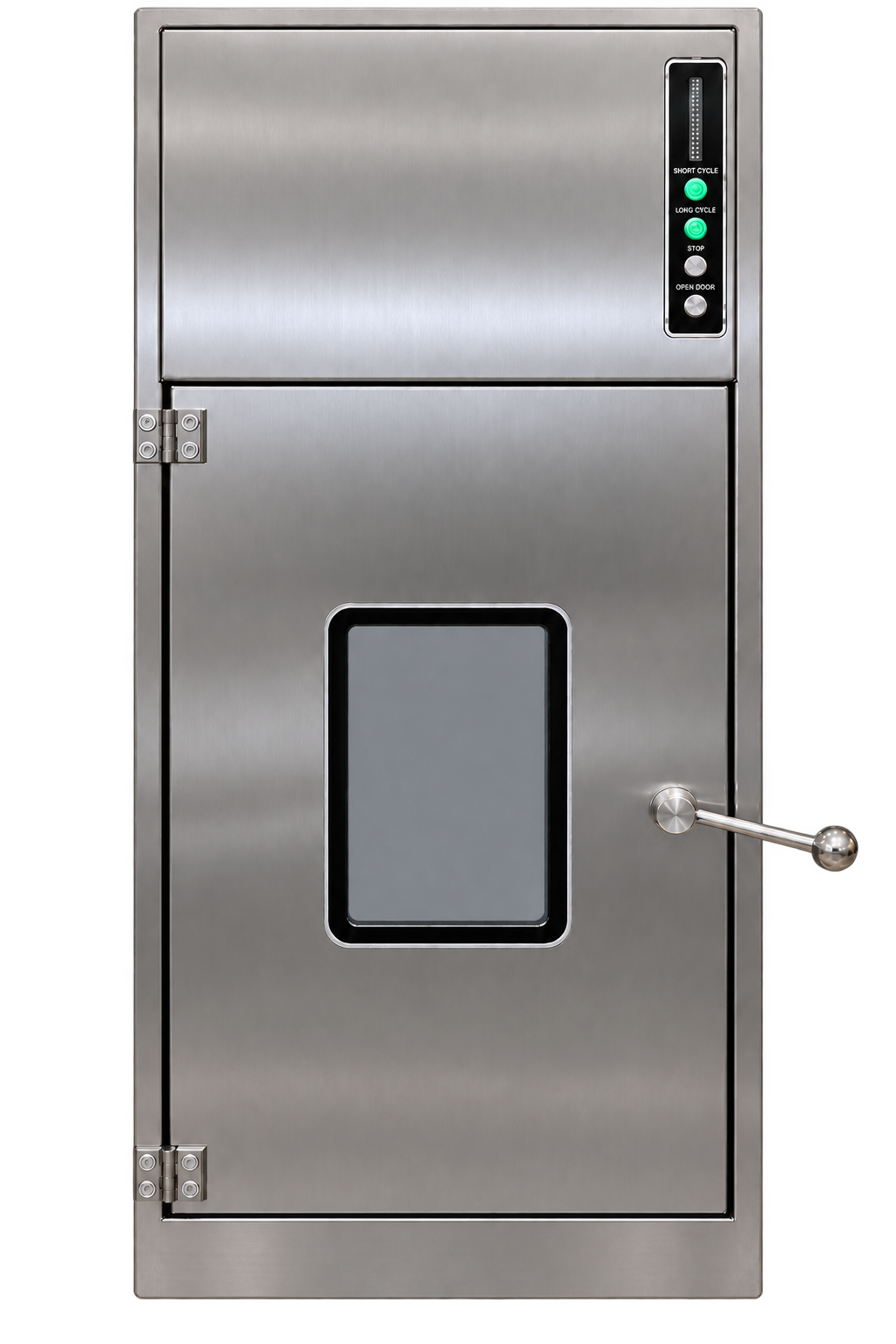
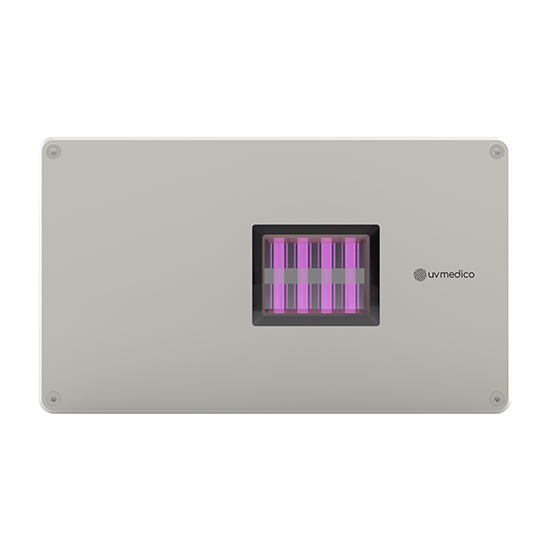
This is why Far-UVC cannot be assessed in the abstract. A ceiling-integrated fitting in a ward bay, a downlight in a waiting area, a material airlock system in a pharmaceutical facility and an ambulance-mounted unit may all rely on the same wavelength region, yet the compliance pathway differs because the exposure scenarios differ. Distance to occupants, dwell time, reflective materials, mounting height, shielding, air movement and cleaning protocols all influence the final judgement.
For regulated buyers, this means the real compliance question is broader than product legality. It is whether the complete solution can be justified for its intended use, in its actual environment, with defensible evidence.
Exposure limits are the starting point
Any serious discussion of Far-UVC regulatory compliance begins with exposure limits. These limits define how much radiant exposure a person may receive over a specified period. They are fundamental because Far-UVC is frequently positioned as a people-compatible technology for continuous contamination control. That claim only stands if the delivered exposure remains within recognised thresholds.
This is where technical nuance becomes essential. A lamp may emit in the 222 nm range, yet spectral purity and optical filtering remain critical. Unwanted emissions outside the intended range can materially affect safety calculations. Equally, compliance is not established by measuring irradiance at one convenient point beneath a fixture. Sound assessment considers worst-case locations, likely occupant positioning, reflective surfaces and cumulative exposure across a working day.
For healthcare and life-science buyers, this often changes procurement behaviour. Instead of asking only for output data, they need spectral data, filter performance, irradiance mapping and a clear method for translating measurements into occupant exposure. If that information is absent, confidence in the system should be limited.
Why installation design can change the compliance outcome
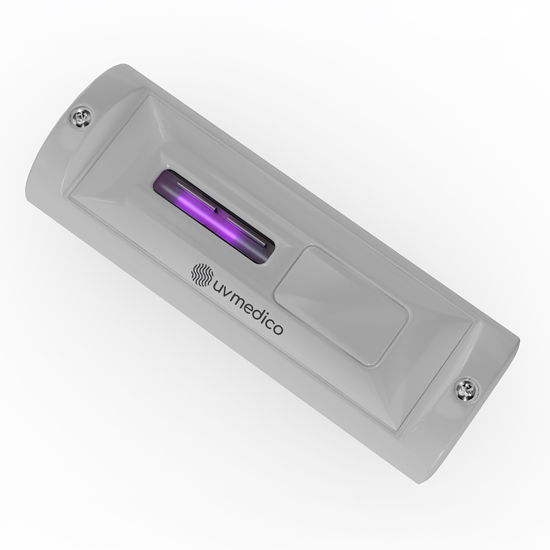
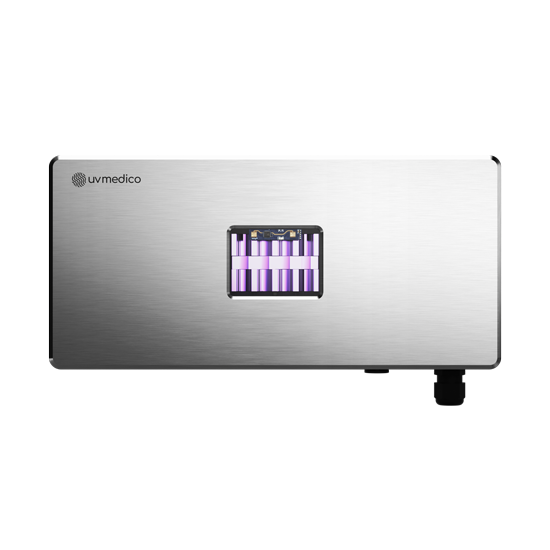
The same Far-UVC fixture can produce very different compliance results depending on how it is installed. Mounting height, tilt, spacing and room finishes all matter. A compliant luminaire can become problematic in a poorly configured installation, while a well-designed layout can preserve both safety margins and decontamination performance.
This is especially relevant in occupied settings where workflows are variable. In an ambulance, personnel movement is close-range and dynamic. In a cleanroom, operators may remain at fixed stations for extended periods. In a hospital corridor, exposure is transient but continuous across many users. Each scenario requires a different modelling approach, and sometimes a different product architecture.
Product standards and technical documentation matter
Exposure management is only one part of the picture. Far-UVC systems deployed in professional environments must also meet relevant product and electrical safety expectations. Buyers in regulated sectors should expect a documented technical file, formal declarations where applicable, test data from competent laboratories and clear installation instructions that reflect real use conditions.
This documentation should not read like generic marketing collateral. It should specify operating conditions, maintenance intervals, component life, cleaning restrictions, filter integrity considerations and any assumptions built into the safety case. If a system relies on a particular ceiling height or occupancy profile to remain within limits, that dependency needs to be explicit.
There is also a practical procurement point here. Many organisations assume that a marked product automatically resolves site-level compliance. It does not. Product conformity and workplace safety assessment are connected, but they are not interchangeable. The purchaser or operator still needs to confirm that the installed system is suitable for the environment, the users and the intended contamination-control objective.
Validation should match the risk profile of the environment
In high-trust environments, validation cannot stop at factory testing. Site acceptance should establish that the installed Far-UVC system performs as designed and remains within the relevant safety envelope. Depending on the application, that may include irradiance verification, exposure calculations, commissioning records and operating procedures for maintenance teams.
The depth of validation should reflect the environment. A public-facing waiting area may require a different level of operational evidence than a Grade B cleanroom transition zone or an ambulance fleet used for high-risk patient transport. There is no single validation pack that fits every deployment.
That is one reason application-specific system design has become so important. Institutional buyers do not need generic ultraviolet hardware. They need evidence that a particular fixture format, optical arrangement and mounting strategy are appropriate for their room, their people and their compliance burden.
The trade-off between maximum output and usable output
A common mistake in the category is to equate higher output with better value. In regulated occupied spaces, the more relevant metric is usable output within compliance limits. If a system produces high irradiance but forces exclusion zones, shortened occupancy or operational workarounds, its real-world value may be lower than a carefully engineered solution designed for continuous operation.
This is particularly important for facilities trying to maintain throughput. Clinical areas cannot pause around decontamination cycles. Cleanrooms cannot introduce unnecessary disruption. Ambulance services cannot accept technologies that compromise turnaround or crew movement. Compliance, in these settings, is not merely a safety requirement. It is what determines whether Far-UVC can function as an operational technology rather than a theoretical one.
Governance, ownership and change control
Far-UVC deployments often sit across multiple internal stakeholders. Infection prevention may sponsor the project, estates may manage installation, procurement may lead supplier selection, and health and safety may own exposure review. In pharmaceutical and semiconductor environments, quality teams may also require formal change control. That makes governance a core part of compliance.
The strongest projects assign clear ownership early. Who approves exposure assumptions? Who signs off commissioning? Who verifies that lamp replacement or filter service does not alter the safety profile? Who updates room documentation if occupancy changes? These questions are not administrative detail. They determine whether compliance remains stable after go-live.
This matters because systems drift when governance is weak. Fixtures are moved. Ceiling layouts change. Maintenance is deferred. Temporary shielding is removed. Occupancy patterns shift. A compliant installation at handover can become a non-compliant one over time if no control process exists.
What buyers should ask before specifying a system
When evaluating Far-UVC for continuous decontamination, the most useful supplier conversations are precise. Ask how exposure is calculated for occupied use. Ask what spectral filtering is in place and how it is verified. Ask whether the proposed layout has been modelled for your room geometry rather than copied from a brochure. Ask what commissioning evidence will be provided and what maintenance actions could affect compliance.
It is also worth asking what the system is not designed to do. Authoritative suppliers are clear about limitations. Some spaces may need a different fixture type. Some contamination challenges may require combined strategies. Some rooms may support continuous Far-UVC use only after design adjustments. That level of candour is usually a sign of a mature compliance culture.
For organisations building a business case, compliance should be framed as an enabler of reliable microbial control. When a system is engineered around recognised exposure limits, validated in the intended environment and supported by proper documentation, it becomes far easier to defend internally and sustain operationally.
Far-UVC will continue to attract attention because it addresses a real need: continuous decontamination in occupied spaces. But in mission-critical environments, technical promise is only meaningful when it is translated into compliant implementation. The organisations that benefit most will be those that treat compliance not as friction, but as the discipline that makes performance usable.
.png)
.png)

.png)
.png)


.png)


 Insights
 Science
 Compliance
.jpg?width=30&name=Untitled%20design%20(26).jpg) Mohammad Fawzi : 25 Sep, 2025
Mohammad Fawzi : 25 Sep, 2025


.jpg)


.jpg)
.jpg)
.jpg)