The real question behind is far uvc safe is not whether 222 nm light can inactivate microorganisms. It can. The question that matters in hospitals, cleanrooms, ambulances and other controlled environments is whether Far-UVC can deliver continuous decontamination in occupied spaces while remaining within established safety limits. That is where procurement decisions should be made - not on headlines, but on wavelength specificity, exposure control, optical engineering and compliance.
Far-UVC is not a blanket term for any short-wavelength ultraviolet source. In practice, discussions about occupied-space use are centred on filtered 222 nm excimer technology. That distinction matters. Safety claims should never be transferred loosely across different wavelengths, lamp types or poorly characterised systems. For decision-makers in regulated environments, the answer is conditional but clear: Far-UVC can be used safely in occupied settings when the system is properly engineered, filtered, validated and installed to operate within recognised human exposure limits.
Is Far UVC safe? The short answer
Yes - with an important qualification. Far-UVC at 222 nm has been studied because it appears to offer a useful balance between microbial efficacy and limited penetration into the outer non-living layers of skin and the tear layer covering the eye. That is why it is being considered for continuous contamination control where people remain present.
But safe use does not come from wavelength alone. It depends on the full system design, including spectral purity, irradiance profile, mounting geometry, room reflectivity, occupancy pattern and verified compliance with applicable exposure thresholds. A credible Far-UVC deployment is therefore an engineered solution, not simply a lamp installed overhead.
This distinction is especially relevant in healthcare and life-science settings, where any technology used around staff, patients or operators must satisfy both practical and governance requirements. A system may be microbiologically effective and still be unsuitable if exposure modelling, commissioning and controls are not addressed properly.
Why 222 nm is treated differently
Conventional germicidal ultraviolet technologies, particularly around 254 nm, are effective for microbial control but are generally not intended for direct use in occupied zones. Far-UVC at 222 nm is being treated differently because of how that wavelength interacts with biological material.
The current scientific rationale is that 222 nm light is strongly absorbed by proteins and other biomolecules, which limits how deeply it can penetrate into human tissue. Microorganisms such as bacteria and viruses are much smaller and more directly exposed, so they can still be inactivated. Human skin, by contrast, has outer dead-cell layers that provide a barrier. The surface of the eye also has protective structures that reduce deeper penetration under controlled exposure conditions.
That does not mean 222 nm is harmless in any amount. It means its biophysical behaviour is different enough to justify careful use within exposure limits. For professional buyers, that is the operative concept: different risk profile, not zero risk.
Safety depends on filtering, not marketing
One of the most important issues in Far-UVC safety is spectral filtering. Excimer lamps used for 222 nm applications can produce unwanted longer-wavelength emissions if they are not properly filtered. Those spectral impurities can materially change the safety profile.
This is where many oversimplified claims fail. A product described as 222 nm is not necessarily equivalent to a fully filtered, measured and documented Far-UVC system. In procurement terms, the source must be assessed as a complete optical device, with evidence for emitted spectrum, filter performance, exposure calculations and installation guidance.
In mission-critical environments, safety should be demonstrated through data. That includes spectral measurements, irradiance mapping, projected occupant exposure, and clear operating conditions. If a supplier cannot provide these elements, the right response is caution.
Exposure limits are central to the answer
For organisations asking is far uvc safe, exposure limits are the point where science becomes operational reality. Safety is assessed against established limits set by relevant advisory bodies and standards frameworks. These limits define how much radiant exposure a person may receive over a defined period.
In practice, this means a Far-UVC system should be designed so that people in the space remain below the applicable threshold during normal occupancy. That requires more than nominal lamp output. It requires understanding of ceiling height, beam angles, workstation locations, line of sight, reflective surfaces and time spent in the area.
A well-designed installation can support continuous decontamination while maintaining controlled occupant exposure. A poor installation can do the opposite, even if the lamp itself is technically capable. This is why application-specific design matters so much in patient rooms, corridors, preparation areas, material transfer spaces, ambulance cabins and cleanroom workflows.
What the current evidence supports
The evidence base around filtered 222 nm Far-UVC has grown significantly, with studies examining microbial efficacy, dosimetry and biological response. Broadly, the literature supports continued investigation and real-world deployment under controlled conditions, particularly for airborne contamination control in occupied spaces.
For professional stakeholders, the practical takeaway is that the field has moved beyond theory alone. There is now a meaningful body of experimental and applied work supporting the use of filtered 222 nm systems as part of infection prevention and environmental control strategies. At the same time, serious operators should avoid overstatement. The evidence supports carefully engineered use, not indiscriminate installation.
This matters because regulated sectors do not buy novelty. They buy validated performance, safety assurance and operational continuity. Far-UVC is compelling precisely because it can be integrated into occupied environments without forcing room shutdowns or interrupting workflow, but only when the system has been designed around those constraints from the outset.
Where Far-UVC fits best
Far-UVC is particularly relevant where continuous contamination control has clear value and where intermittent manual cleaning or unoccupied-room technologies leave gaps. In healthcare, that may include waiting areas, treatment spaces, corridors and ambulance interiors. In cleanrooms and life-science production, it may support lower bioburden pressure around personnel movement, gowning transitions and material handling. In public-facing indoor environments, it may complement ventilation and filtration strategies aimed at airborne risk reduction.
The key advantage is operational compatibility. If a decontamination method only works when the room is empty, its impact is limited by scheduling. Far-UVC changes that equation by making continuous treatment possible during routine occupancy, provided the installation is compliant and suited to the environment.
That said, it is not a standalone answer to every contamination problem. Surface geometry, shadowing, air mixing and room-specific behaviours still matter. Far-UVC should be positioned as part of a wider infection prevention or contamination control strategy, alongside ventilation, cleaning protocols, PPE and process discipline where relevant.
Common misunderstandings that distort the safety discussion
A frequent mistake is treating all ultraviolet technologies as interchangeable. They are not. Wavelength, dose, source type and filtering all influence both efficacy and human exposure profile.
Another mistake is assuming that if 222 nm is safer, installation details are secondary. In fact, installation is one of the primary determinants of safe use. Ceiling height, fixture placement and occupant position can change dose distribution considerably.
The third misunderstanding is expecting a binary answer. Senior buyers often ask for one because governance processes require clarity. But the scientifically accurate answer is conditional: Far-UVC can be safe in occupied spaces when engineered and operated within defined limits. That is a stronger and more useful answer than either blanket reassurance or blanket rejection.
What buyers should ask before approving a system
A credible supplier should be able to explain the emitted spectrum, confirm filtration of unwanted wavelengths, provide exposure calculations for the intended environment, and support commissioning with measured data. They should also be able to discuss maintenance, lamp ageing, validation intervals and any changes in output over time.
Just as importantly, they should understand the application itself. An ambulance cabin, an isolation room and a cleanroom entry zone do not behave the same way. The right system architecture, mounting configuration and operating assumptions will differ accordingly.
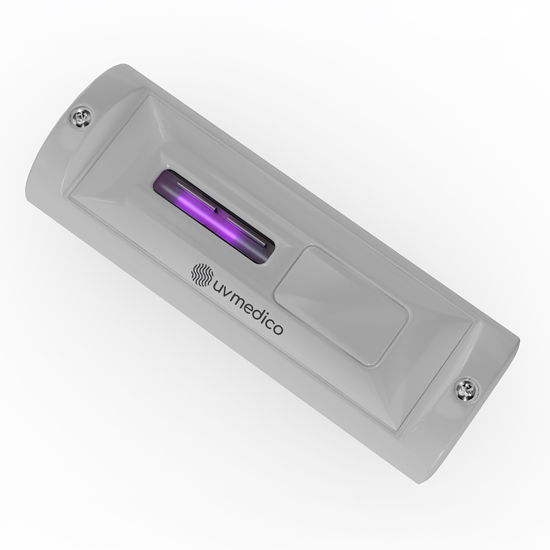
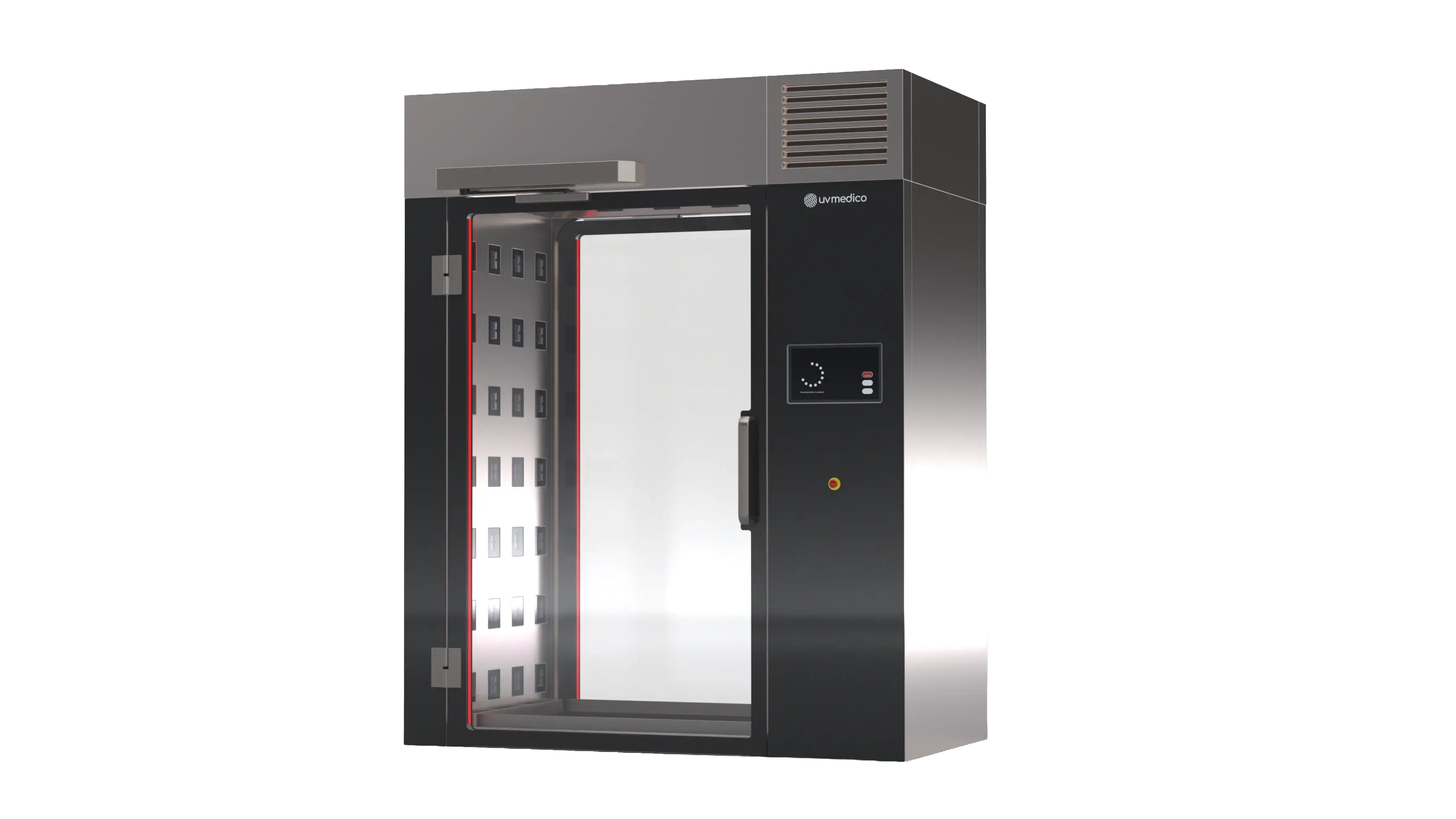
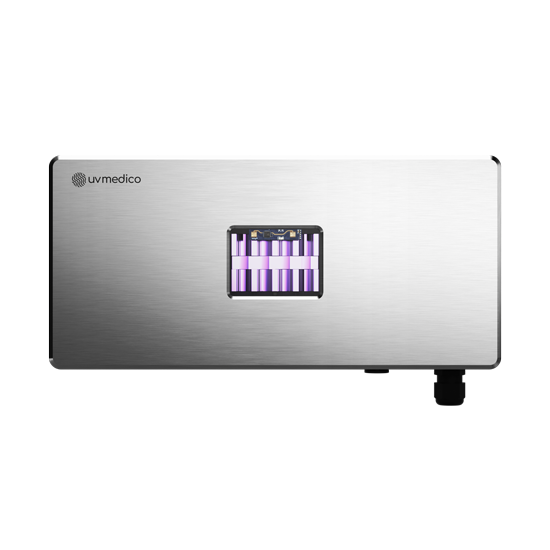
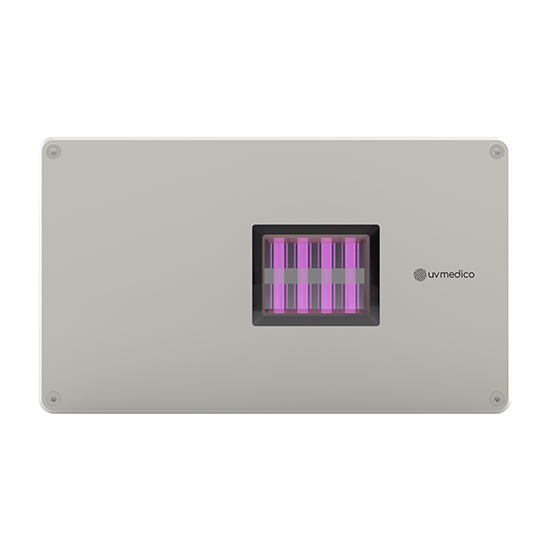
This is where specialised Far-UVC providers stand apart from generic ultraviolet vendors. UV Medico, for example, positions Far-UVC not as a generic fixture category but as an application-specific approach to continuous decontamination in occupied, regulated environments. That is the level at which the safety conversation should happen.
Far-UVC is promising because it offers something institutions have wanted for years - effective decontamination that does not force people out of the space. The organisations that benefit most will be the ones that treat safety not as a slogan, but as a design criterion built into every stage from specification to installation. That is how confidence is earned, and how continuous contamination control becomes operationally viable.
.png)
.png)

.png)
.png)


.png)


 Insights
 Science
 Compliance
 Jordi Amagat Molas : 05 Nov, 2024
.jpg)
.jpg)

.jpg)
.jpg)