← Science & evidence

Far-UVC for human exposure

Far-UVC light at 222 nm is absorbed in the outermost layers of the skin and eyes, and does not reach the living cells beneath.

This allows Far-UVC to inactivate microorganisms in occupied spaces, provided each installation keeps exposure within established limits (ACGIH / ICNIRP). This page summarises current knowledge on the safety of Far-UVC exposure.

See the evidence Talk to a specialist

Key highlights

  • Far-UVC radiation at 222 nm has fundamentally different biological interactions than conventional 254 nm UV-C due to its extremely limited penetration in biological tissues.
  • Experimental and long-term studies reported no skin damage or skin cancer in the conditions tested, including exposures well above the limits.
  • Studies across different skin types, including people with photosensitivity disorders, reported consistent results.
  • Animal studies and small clinical studies reported no tissue damage or adverse effects in wounds at the doses tested.
  • Clinical and real-world studies reported no eye damage or eye irritation at exposures within established limits.

The principle

Why 222 nm is different

Conventional 254 nm UV-C is absorbed mainly by DNA and penetrates into living tissue. Far-UVC at 222 nm is also strongly absorbed by proteins, so it is stopped in the outermost surface layers of the skin and eyes.

1. Proteins absorb it first

Proteins are abundant in the outer layers of skin and eyes. At 222 nm they absorb the light within a very thin surface layer.

2. Living cells are not reached

The light is attenuated before it reaches the deeper layers where living cells are.

See the exposure limits

How far 222 nm and 254 nm UV light penetrate skinSimplified cross-section of skin. 222 nm light is stopped in the outer layer of dead skin cells. 254 nm light passes through it and reaches the living cells below.Dead outer layerLiving cellsDeeper tissue222 nm254 nm

222 nm is stopped in the dead outer layer.

254 nm passes through and reaches living cells.

Simplified skin cross-section, not to scale. The same principle applies to the outer layer of the cornea in the eye. See the absorption data →

Exposure limits for Far-UVC (222 nm)

Exposure limits define the maximum dose of UV light a person can receive over an 8-hour day. Two guidelines are used for Far-UVC: the ACGIH Threshold Limit Values (TLVs) and the ICNIRP guidelines.

The ACGIH TLVs were revised in 2022 to reflect the substantial body of research on filtered 222 nm radiation published over the past decade. At 222 nm, they set 160 mJ/cm² for the eye and 479 mJ/cm² for the skin. The ACGIH TLVs are widely used in occupational health practice and are reflected in safety standards such as ANSI/IES RP-27.

The ICNIRP guidelines date from 2004, before filtered Far-UVC was commercially available. They set a single, more conservative limit of 23 mJ/cm² for both eye and skin, and remain the reference in EU workplace legislation.

As the evidence continues to build, the ACGIH TLVs represent the current state of knowledge and the direction in which international exposure standards are moving.

8-hour limit at 222 nm

ACGIH (2022)ICNIRP (2004)
Eye160 mJ/cm²23 mJ/cm²
Skin479 mJ/cm²23 mJ/cm²

Compliant wherever they are installed

Regardless of which framework applies, UV Medico’s UV222 fixtures are built to adapt to the local TLVs of the country where they are used. Whether a site follows the ACGIH TLVs or the ICNIRP limits, the installation can be configured to stay within the applicable limit.

A wide safety margin above both limits

Several peer-reviewed studies have tested filtered 222 nm doses far above the ICNIRP limit, and in many cases above the ACGIH limits as well. These findings show that both exposure limits sit well below the levels at which any effect has been observed.

× ICNIRP× ACGIHModelFinding
≈800×≈38×Human forearm skin (case study)No burns or skin damage [1]
>200×>10×UV-sensitive mouse skinNo skin tumours at up to 5,000 mJ/cm² per exposure [4]
>150×>20×Rat corneaSigns of corneal damage only above ≈3,500 mJ/cm² [14]
≈50×≈2.4×Hairless mouse skinMinimal skin response only at ≈1,162 mJ/cm² [2]

Doses are expressed as multiples of the 8-hour limits at 222 nm: ICNIRP 23 mJ/cm² (eye and skin); ACGIH 160 mJ/cm² (eye) and 479 mJ/cm² (skin). Animal and tissue-model results indicate biological thresholds and do not translate directly into human exposure limits.

Skin and eye safety

Skin

The stratum corneum, the outermost layer of dead skin cells, acts as a natural protective barrier and absorbs Far-UVC. It does not reach the living cells deeper in the stratum basale.

Eyes

Far-UVC is absorbed by proteins in the outermost corneal epithelium, layers that are naturally shed. It does not reach the deeper layers of the cornea, where biologically significant damage could occur.

83

individuals, including patients with photosensitivity disorders, with no visible skin reactions[6]

66 weeks

of chronic exposure with no skin cancer in UV-susceptible mice[3]

36 months

of ocular observation with no clinically significant changes[16]

Highlights from peer-reviewed safety studies

Across the studies below, no adverse skin or eye effects were reported at exposures within established limits, and in several studies at exposures well above them.
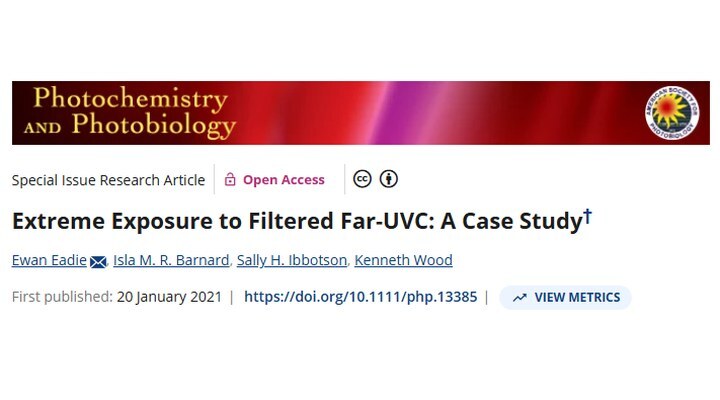
Title page of the peer-reviewed study (opens the publication)
Skin

A volunteer exposed his forearms to doses nearly 800 times the ICNIRP limit and experienced no burns or skin damage.

Read the study →
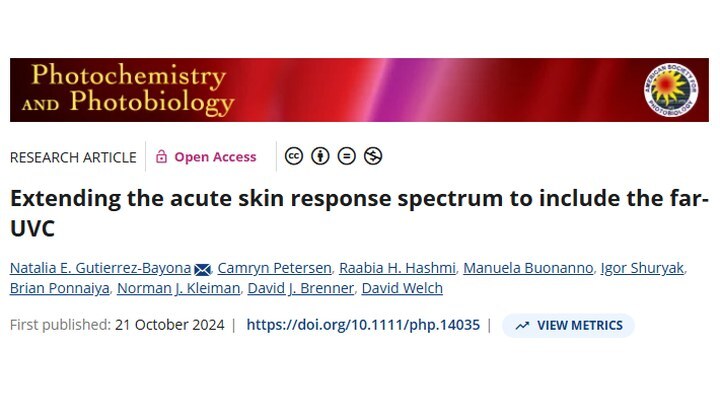
Title page of the peer-reviewed study (opens the publication)
Skin

At 222 nm, about 1162 mJ/cm² was needed to produce a minimal skin response, well above established exposure limits.

Read the study →
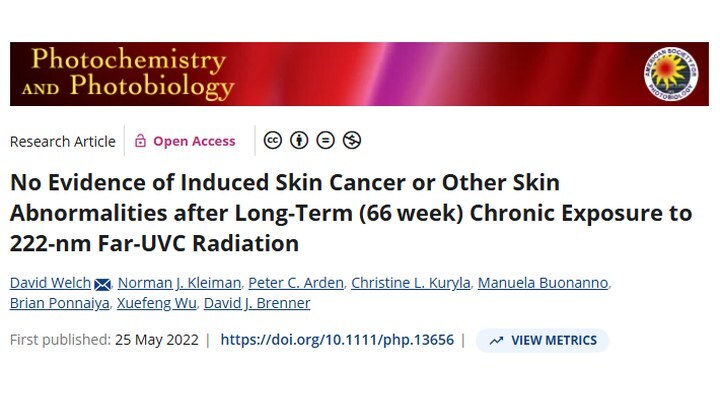
Title page of the peer-reviewed study (opens the publication)
Skin

No skin cancer, precancerous lesions or abnormal skin growths in UV-susceptible mice after 66 weeks of daily exposure.

Read the study →
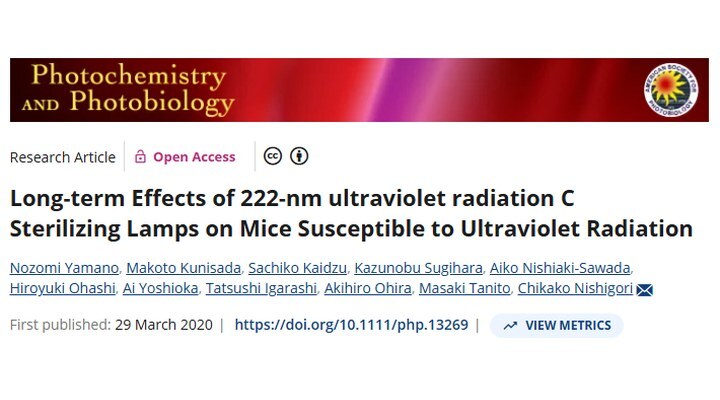
Title page of the peer-reviewed study (opens the publication)
Skin

No skin tumours developed, even in highly UV-sensitive mice exposed to up to 5,000 mJ/cm² per exposure.

Read the study →
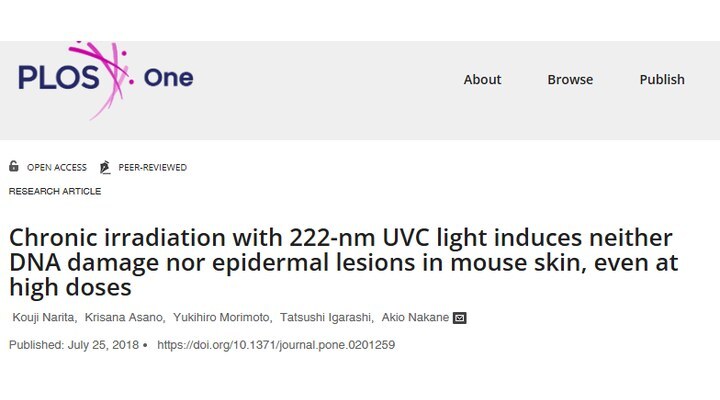
Title page of the peer-reviewed study (opens the publication)
Skin

Repeated daily exposure at 450 mJ/cm² caused no DNA damage and no epidermal abnormalities in mouse skin.

Read the study →
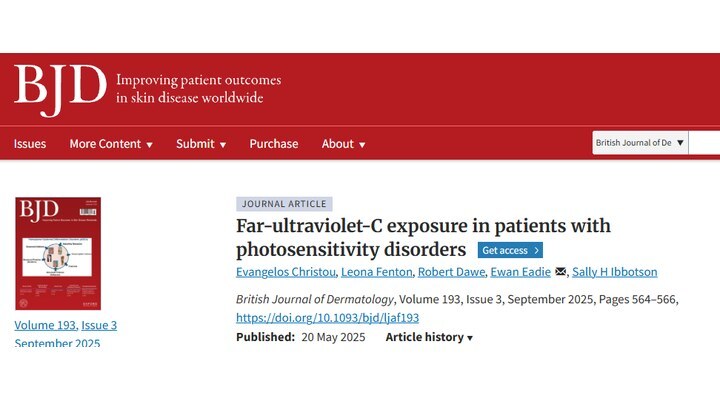
Title page of the peer-reviewed study (opens the publication)
Skin

No erythema or other visible skin reactions in 83 individuals, including patients with photosensitivity disorders.

Read the study →
Title page of the peer-reviewed study (opens the publication)
Skin

No significant DNA damage at 100 mJ/cm². The protective stratum corneum was consistent across ages, sexes, ethnicities and skin phototypes.

Read the study →
Title page of the peer-reviewed study (opens the publication)
Skin

Even with the stratum corneum removed in the model, less than 1% of 222 nm radiation reached the basal layer.

Read the study →
Title page of the peer-reviewed study (opens the publication)
Skin

Transmission of 222 nm through cell layers was about ten times lower than 254 nm, and underlying cells remained viable.

Read the study →
Title page of the peer-reviewed study (opens the publication)
Skin

10 minutes of sunlight produces the same DNA damage in the basal layer as roughly four years of continuous filtered 222 nm Far-UVC.

Read the study →
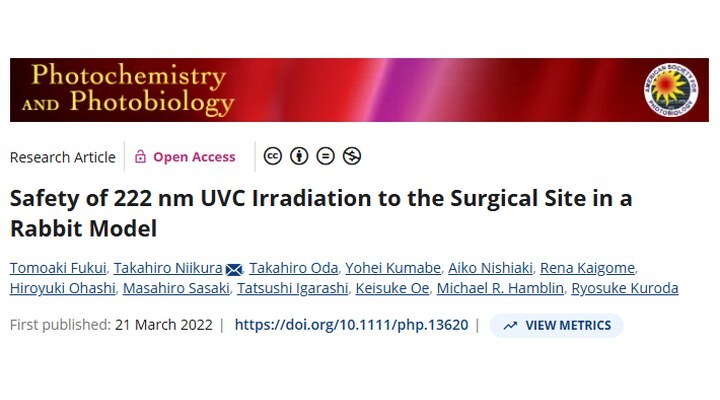
Title page of the peer-reviewed study (opens the publication)
Wounds

No tissue damage, delayed healing or abnormal inflammatory response in irradiated surgical wounds.

Read the study →
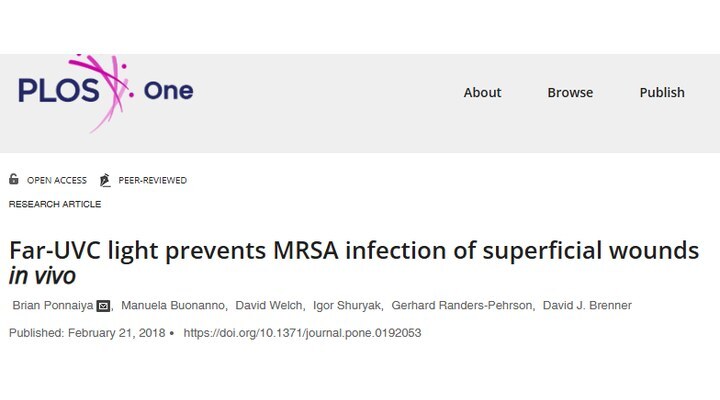
Title page of the peer-reviewed study (opens the publication)
Wounds

No increase in epidermal thickness or DNA damage in wounded skin, unlike conventional 254 nm UV-C.

Read the study →
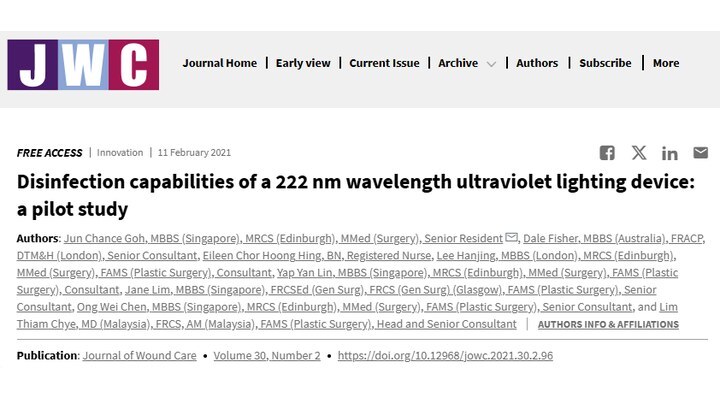
Title page of the peer-reviewed study (opens the publication)
Wounds

No erythema, blistering or tissue irritation across 68 treatment sessions in 16 patients with pressure ulcers.

Read the study →
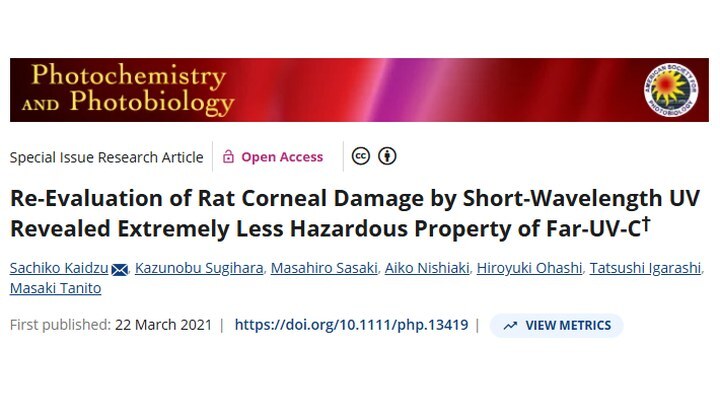
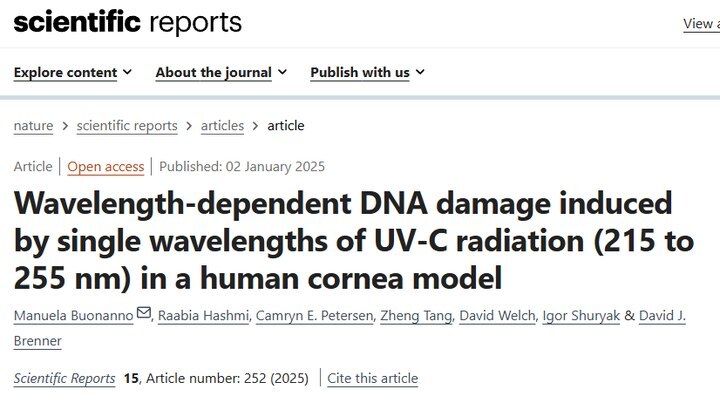
Title page of the peer-reviewed study (opens the publication)
Eyes

Signs of corneal damage appeared only at more than 150 times the ICNIRP limit.

Read the study →
Title page of the peer-reviewed study (opens the publication)
Eyes

DNA damage was limited to superficial layers, with no measurable increase in the regenerative basal layer of the cornea.

Read the study →
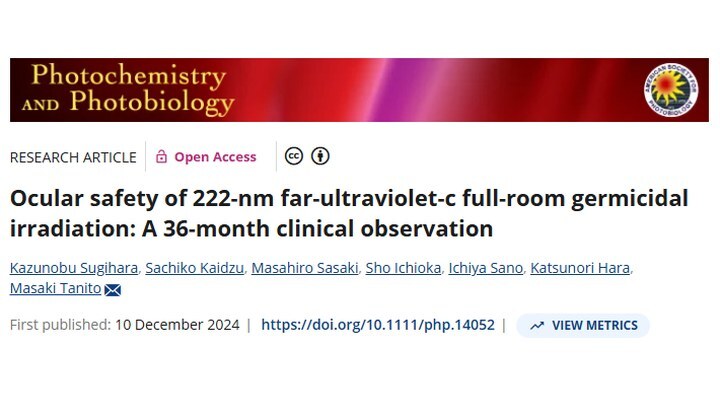
Title page of the peer-reviewed study (opens the publication)
Eyes

Over 36 months, ophthalmologists working under filtered 222 nm lamps showed no clinically significant changes in any ocular parameter.

Read the study →
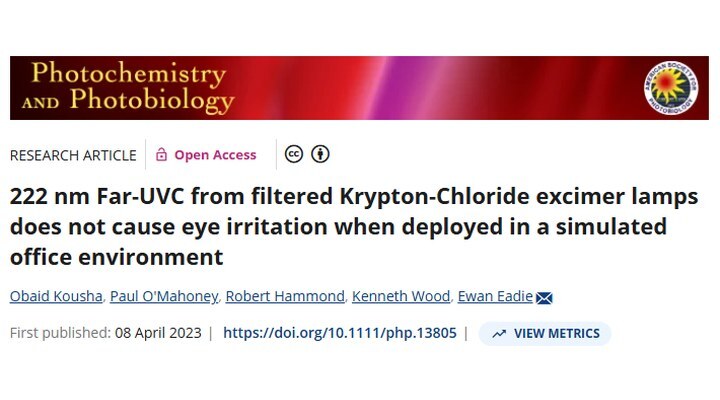
Title page of the peer-reviewed study (opens the publication)
Eyes

No statistically significant increase in eye discomfort or irritation among 37 participants in a simulated office.

Read the study →
Explore the full research libraryBrowse 170+ Far-UVC publications on efficacy, safety and applications.Browse the publications →

Designed for your space, within the limits

UV Medico's simulation program models efficacy and safety together — geometry, surfaces, occupancy and how the space is used — rather than an idealised box. Every UV222 installation is designed with an installation-specific exposure assessment.

Request a simulation Get a quote

Prefer to talk first? Contact a specialist →

References

  1. Eadie, E., Barnard, I. M. R., Ibbotson, S. H. & Wood, K. Extreme exposure to filtered Far-UVC: a case study. Photochem Photobiol 97, 527–531 (2021). doi:10.1111/php.13385
  2. Gutierrez-Bayona, N. E. et al. Extending the acute skin response spectrum to include the Far-UVC. Photochem Photobiol 101, 673–682 (2025). doi:10.1111/php.14035
  3. Welch, D. et al. No evidence of induced skin cancer or other skin abnormalities after long-term (66 week) chronic exposure to 222-nm Far-UVC radiation. Photochem Photobiol (2022). doi:10.1111/php.13656
  4. Yamano, N. et al. Long-term effects of 222-nm ultraviolet radiation C sterilizing lamps on mice susceptible to ultraviolet radiation. Photochem Photobiol 96, 853–862 (2020). doi:10.1111/php.13269
  5. Narita, K., Asano, K., Morimoto, Y., Igarashi, T. & Nakane, A. Chronic irradiation with 222-nm UVC light induces neither DNA damage nor epidermal lesions in mouse skin, even at high doses. PLoS One 13, e0201259 (2018). doi:10.1371/journal.pone.0201259
  6. Christou, E., Fenton, L., Dawe, R., Eadie, E. & Ibbotson, S. H. Far-ultraviolet-C exposure in patients with photosensitivity disorders. Br J Dermatol 193, 564–566 (2025). doi:10.1093/bjd/ljaf193
  7. Buonanno, M., Petersen, C., Welch, D., Hashmi, R. & Brenner, D. J. 222 nm Far-UVC light and skin health: assessment of DNA damage across different skin types. Photochem Photobiol (2025). doi:10.1111/php.70010
  8. Finlayson, L. et al. Depth penetration of light into skin as a function of wavelength from 200 to 1000 nm. Photochem Photobiol 98, 974–981 (2022). doi:10.1111/php.13550
  9. Hanamura, N., Ohashi, H., Morimoto, Y., Igarashi, T. & Tabata, Y. Viability evaluation of layered cell sheets after ultraviolet light irradiation of 222 nm. Regen Ther 14, 344–351 (2020). doi:10.1016/j.reth.2020.04.002
  10. Eadie, E. et al. Computer modeling indicates dramatically less DNA damage from Far-UVC krypton chloride lamps (222 nm) than from sunlight exposure. Photochem Photobiol 97, 1150–1154 (2021). doi:10.1111/php.13477
  11. Fukui, T. et al. Safety of 222 nm UVC irradiation to the surgical site in a rabbit model. Photochem Photobiol 98, 1365–1371 (2022). doi:10.1111/php.13620
  12. Ponnaiya, B. et al. Far-UVC light prevents MRSA infection of superficial wounds in vivo. PLoS One 13, e0192053 (2018). doi:10.1371/journal.pone.0192053
  13. Goh, J. C. et al. Disinfection capabilities of a 222 nm wavelength ultraviolet lighting device: a pilot study. J Wound Care 30, 96–104 (2021). doi:10.12968/jowc.2021.30.2.96
  14. Kaidzu, S. et al. Re-evaluation of rat corneal damage by short-wavelength UV revealed extremely less hazardous property of Far-UV-C. Photochem Photobiol 97, 505–516 (2021). doi:10.1111/php.13419
  15. Buonanno, M. et al. Wavelength-dependent DNA damage induced by single wavelengths of UV-C radiation (215 to 255 nm) in a human cornea model. Sci Rep 15, 252 (2025). doi:10.1038/s41598-024-84196-4
  16. Sugihara, K. et al. Ocular safety of 222-nm far-ultraviolet-c full-room germicidal irradiation: a 36-month clinical observation. Photochem Photobiol (2024). doi:10.1111/php.14052
  17. Kousha, O., O’Mahoney, P., Hammond, R., Wood, K. & Eadie, E. 222 nm Far-UVC from filtered krypton-chloride excimer lamps does not cause eye irritation when deployed in a simulated office environment. Photochem Photobiol 100, 137–145 (2024). doi:10.1111/php.13805