UV222™ · FILTERED FAR-UVC · MADE IN DENMARK
Far-UVC 222 nm – air & surface microbial reduction where people are present
Science & Technology
Why it can run while people are present
Filtered 222 nm
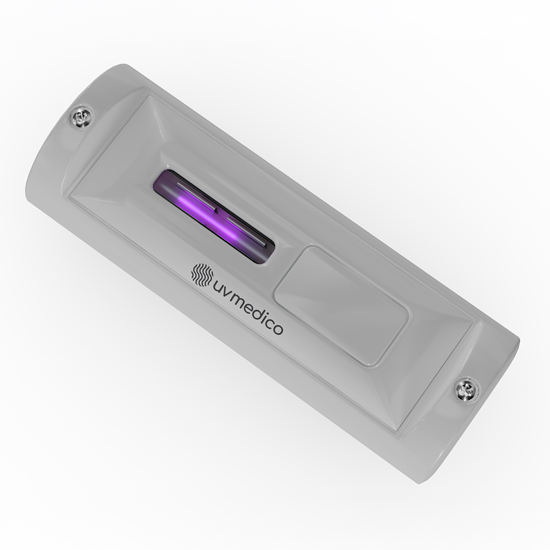
Mercury-free krypton-chloride (KrCl) lamp with an integral optical filter that blocks emissions below ~200 nm and above ~230 nm
Occupied spaces
Absorbed in the non-living outer layer of the skin and in the outermost layer of the cornea – exposure limits still apply
99.8%
reduction in airborne infectious virus (murine norovirus) in an occupied room – Buonanno et al., 2024
170+
peer-reviewed studies in the far-UVC research library, from 20+ years of research
Every installation is designed with an installation-specific exposure assessment.
Where it applies
One far-UVC step for every route into the cleanroom
Personnel, footwear, materials and equipment are the main contamination sources in aseptic production. UV222 adds a far-UVC decontamination step at each one, within your existing workflow and your EU GMP Annex 1 Contamination Control Strategy (CCS).
Personnel entry
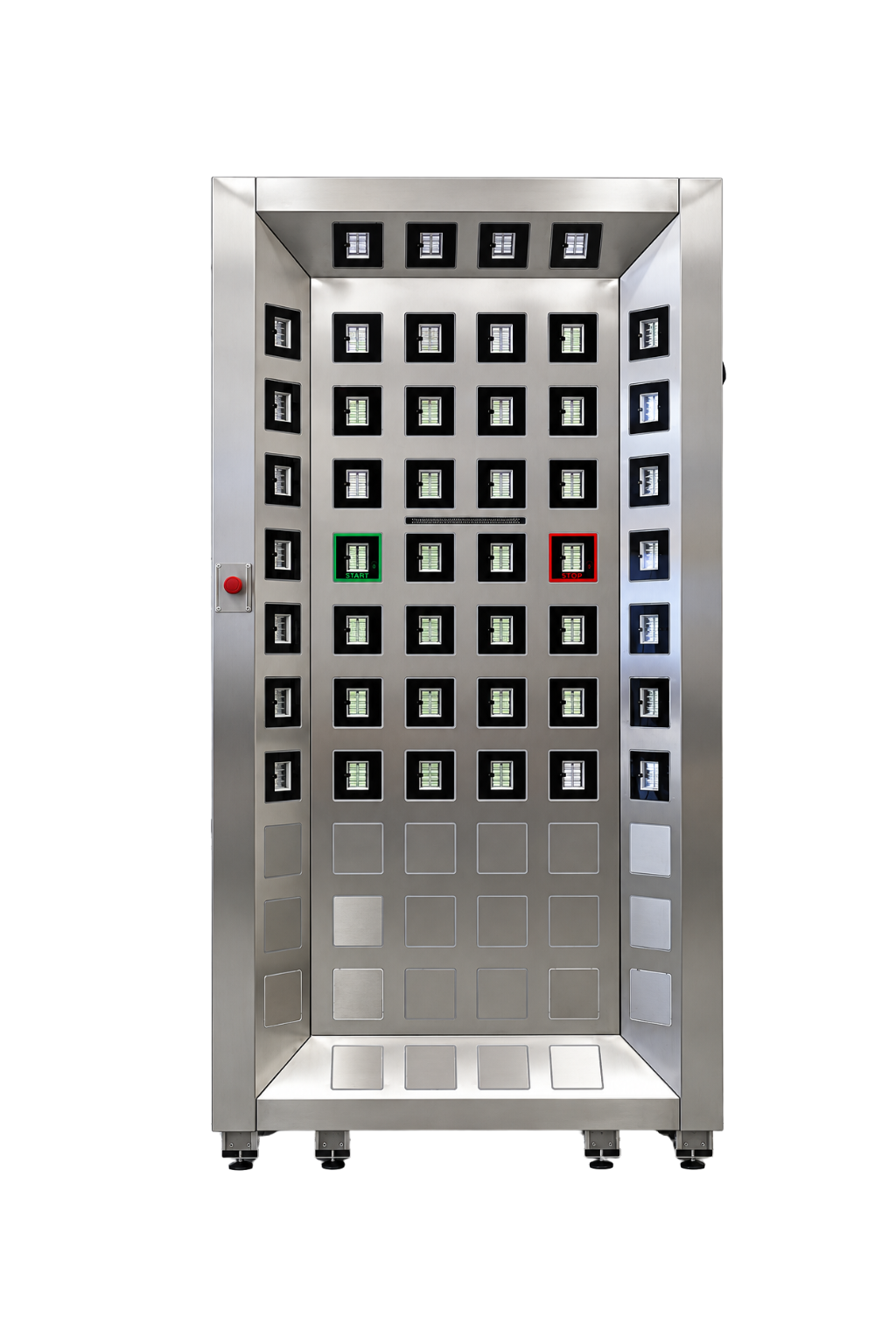
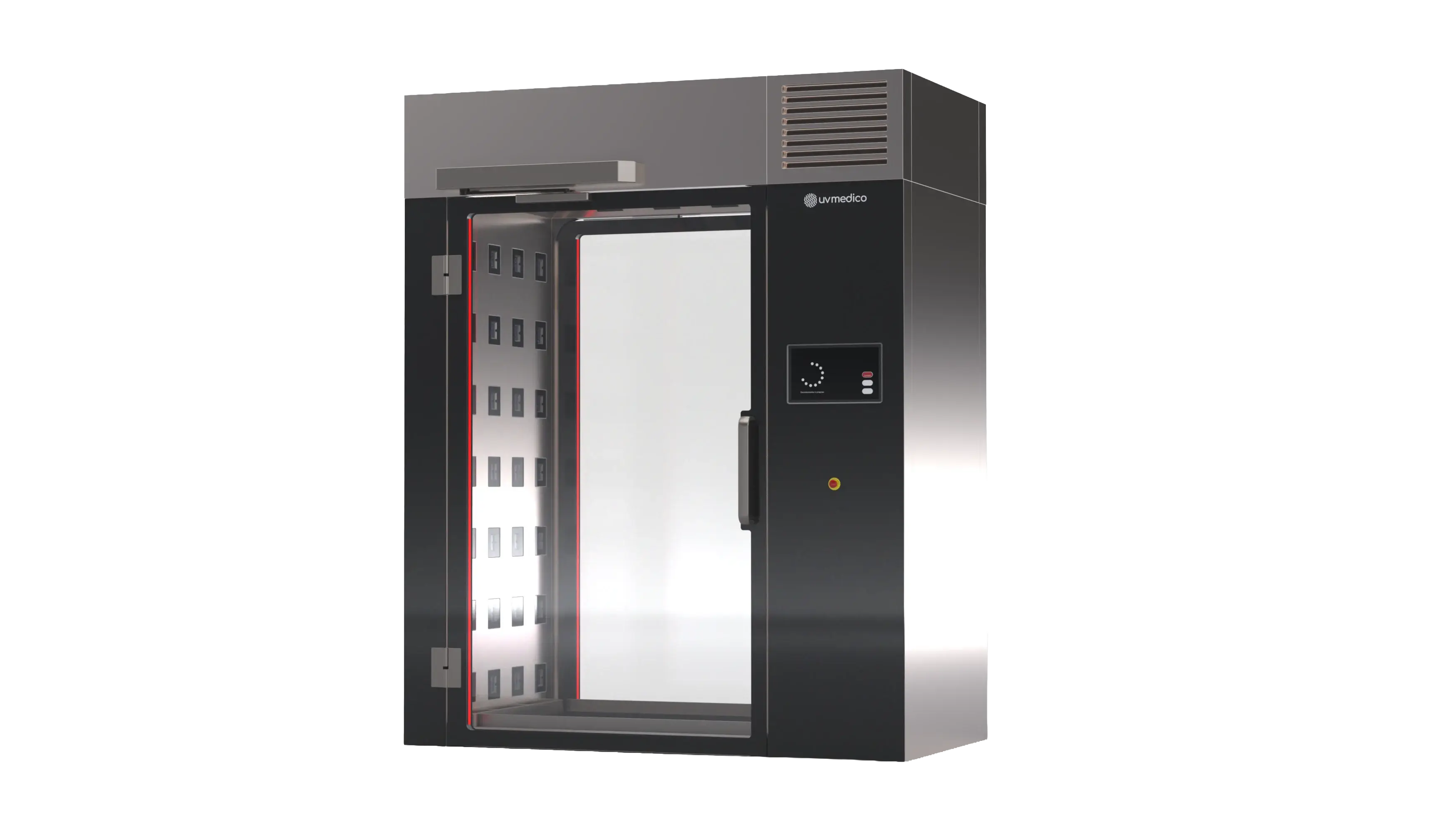
UV222 Booth
Gown decontamination for operators after gowning, before entering the cleanroom.
Personnel entry
UV222 Wall
Wall-mounted gown decontamination where floor space at the entry point is tight.
Zone transitions
UV222 Step-On
Footwear outsole decontamination at critical entry points.
Material transfer
UV222 Material Airlock
Tools, equipment and vessels before they enter a higher grade.
Material transfer
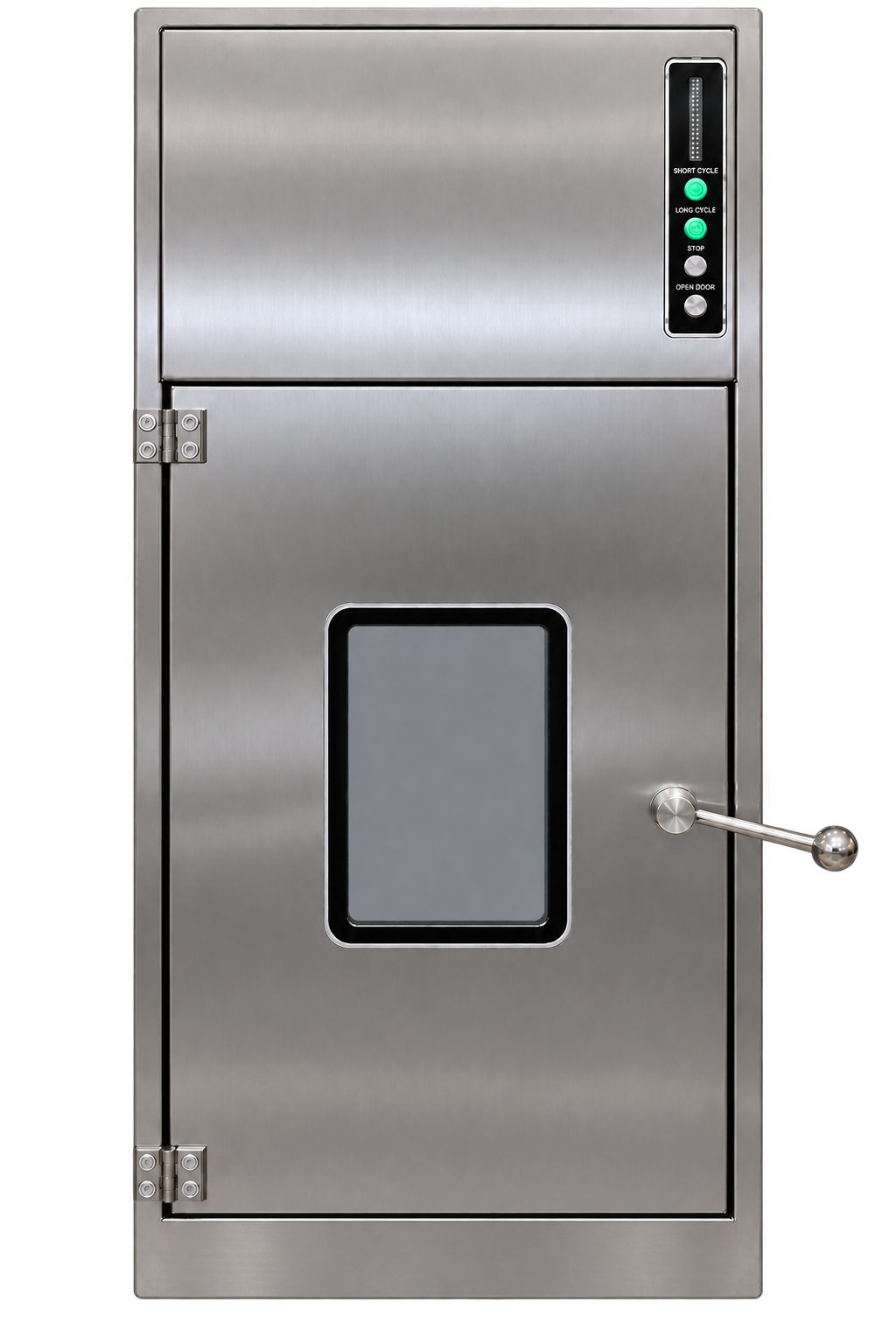
UV222 Pass-Through Box
Smaller items passed between cleanroom grades with programmable cycles.
General areas
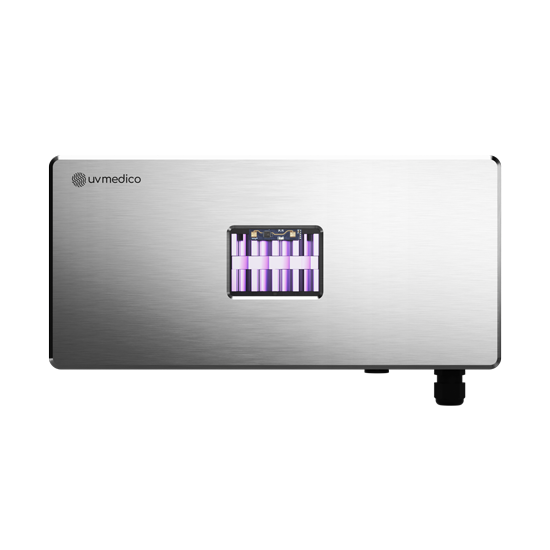
UV222 Cleanroom Downlight
Ceiling-mounted air and surface decontamination in production areas, change rooms and corridors.
General areas
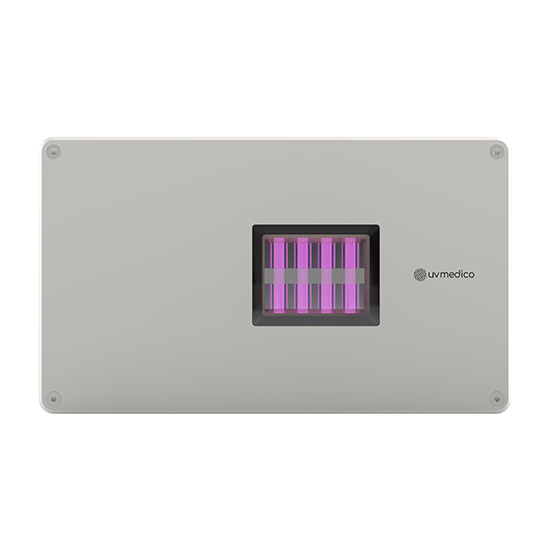
UV222 Dual Downlight 60x60
Fits standard 60x60 ceiling grids in production areas, change rooms and other general areas.
General areas and filling lines
Vertex 222
Mobile unit for production areas and change rooms, and for use at filling lines.
Frequently Asked Questions
What is far-UVC?
Far-UVC is the 200–230 nm part of the germicidal UV-C band. At 222 nm it inactivates bacteria, viruses and fungi by damaging their nucleic acids and proteins. UV222 systems use filtered 222 nm far-UVC to continuously reduce airborne and surface bioburden while people are present.
We already clean and disinfect – why add far-UVC?
Cleaning and disinfection remain essential. The gap is between them: microorganisms are reintroduced and build up as patients, staff and visitors use the space. UV222 adds a continuous layer that helps keep microbial load lower between cleaning cycles, without disrupting clinical activities or adding staff workload.
Can it be used while people are present?
Yes, within applicable exposure limits. At 222 nm the light is absorbed in the non-living outer layer of the skin and in the tear film and outermost layer of the cornea, so very little reaches the living cells beneath. The integral optical filter and built-in safety control keep exposure within ACGIH / ICNIRP limits, and every installation has a site-specific exposure assessment confirmed by measurement at commissioning.
Why 222 nm and not 254 nm UV-C?
254 nm UV-C penetrates deeper into skin and eyes, so it is limited to unoccupied spaces. Filtered 222 nm far-UVC can be used in occupied areas.
How does far-UVC fit into an EU GMP Annex 1 Contamination Control Strategy?
EU GMP Annex 1 requires a Contamination Control Strategy (CCS) that covers all contamination sources, including personnel, materials and equipment. A far-UVC step can be added at specific points, such as personnel entry or material transfer, as a documented risk-reduction measure. It complements gowning, cleaning and environmental monitoring rather than replacing them.
Does it produce ozone?
Very little. 222 nm light produces small amounts of ozone in room air. At the fixture density UV Medico specifies, with normal ventilation, measured levels stay well below applicable guideline limits. In small or poorly ventilated spaces, such as vehicles, ozone is included in the installation-specific assessment.
Can microorganisms become resistant to it?
No acquired resistance to 222 nm has been demonstrated. Because 222 nm damages nucleic acids and proteins directly rather than a single molecular target, antibiotic-style resistance is not expected. Susceptibility varies between organisms: bacterial spores and some fungi need higher doses.
How long do the lamps last?
UV222 lamps are rated for 17,500 hours – roughly two years of continuous 24/7 operation, and longer on a daytime duty cycle. There are no air filters or chemicals to replace, and UV Medico provides a two-year warranty on the system.
Ask our application team
Ready to add far-UVC to your facility?
Tell us about your site. Our application team will help you choose the right products and plan a site-specific exposure assessment.
Latest Insights from UV Medico
UV Medico Partners with Wilhelm Integrated Solutions to Bring UV222™ to Australia and New Zealand
Laura de Querol: Sep 3, 2026
Far-UVC: From the Lab to the Real World | ICFUST 2026 Highlights
Laura de Querol: Jun 30, 2026
ABOUT UV MEDICO
Danish engineering for air and surface microbial reduction
UV Medico A/S develops and manufactures filtered 222 nm far-UVC systems for continuous reduction of airborne and surface bioburden while people are present. Founded in 2019, we combine photonics, microbiology and engineering – from everyday indoor spaces to cleanrooms, hospitals and food production.
About us →.png)
.png)

.png)
.png)


.png)