







UV222™ filtered Far-UVC decontamination solutions for GMP cleanrooms
Continuous far-UVC decontamination of GMP cleanrooms, from gowning room to filling line
Fewer excursions and costly deviations, without changing your workflow
Where it applies
One far-UVC step for every route into the cleanroom
Personnel, footwear, materials and equipment are the main contamination sources in aseptic production. UV222 adds a far-UVC decontamination step at each one, within your existing workflow and your EU GMP Annex 1 Contamination Control Strategy (CCS).
Personnel entry
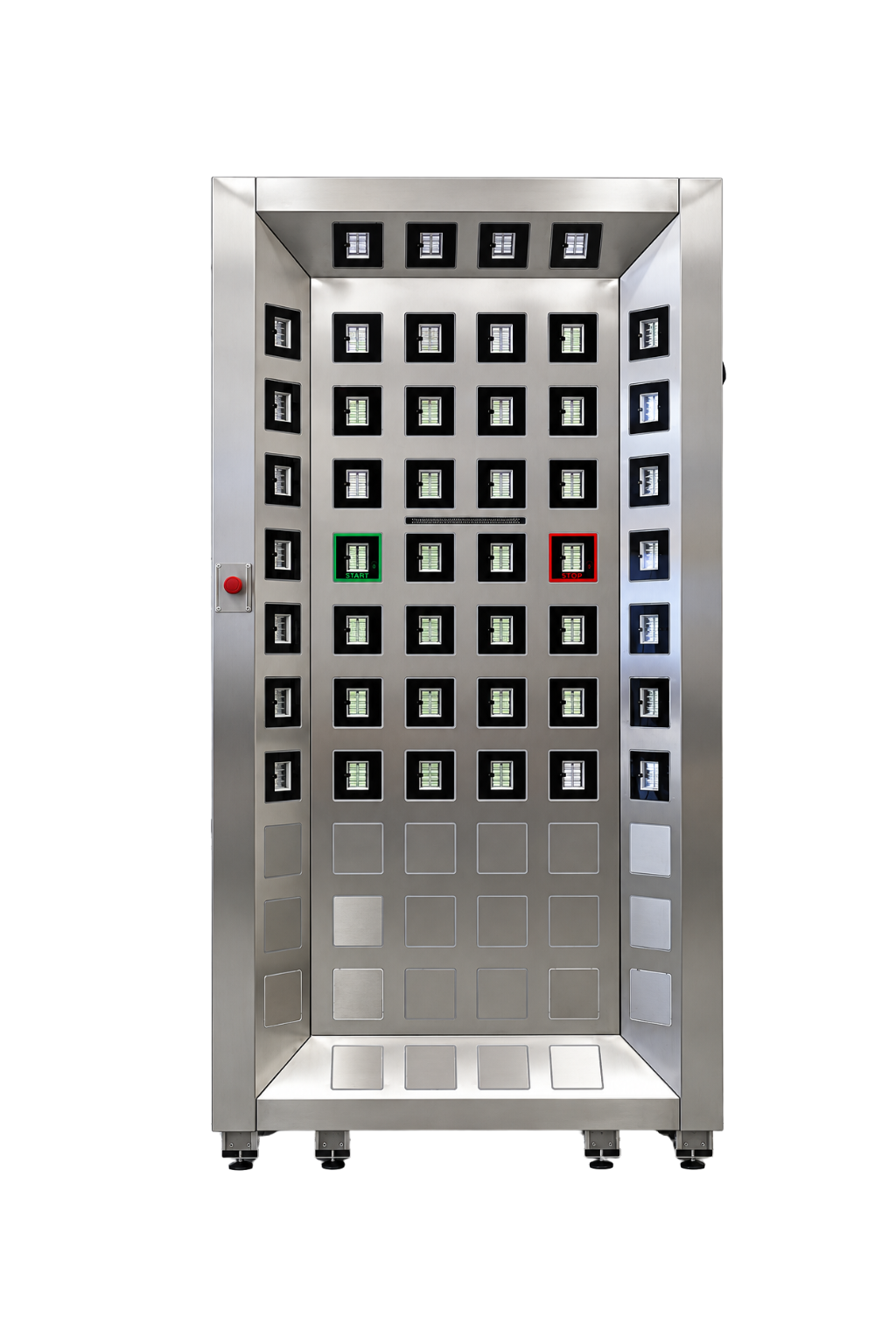
UV222 Booth
Gown decontamination for operators after gowning, before entering the cleanroom.
Personnel entry
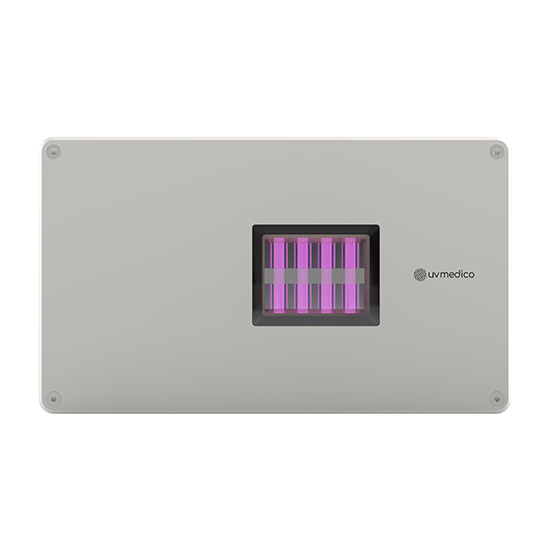
UV222 Wall
Wall-mounted gown decontamination where floor space at the entry point is tight.
Zone transitions
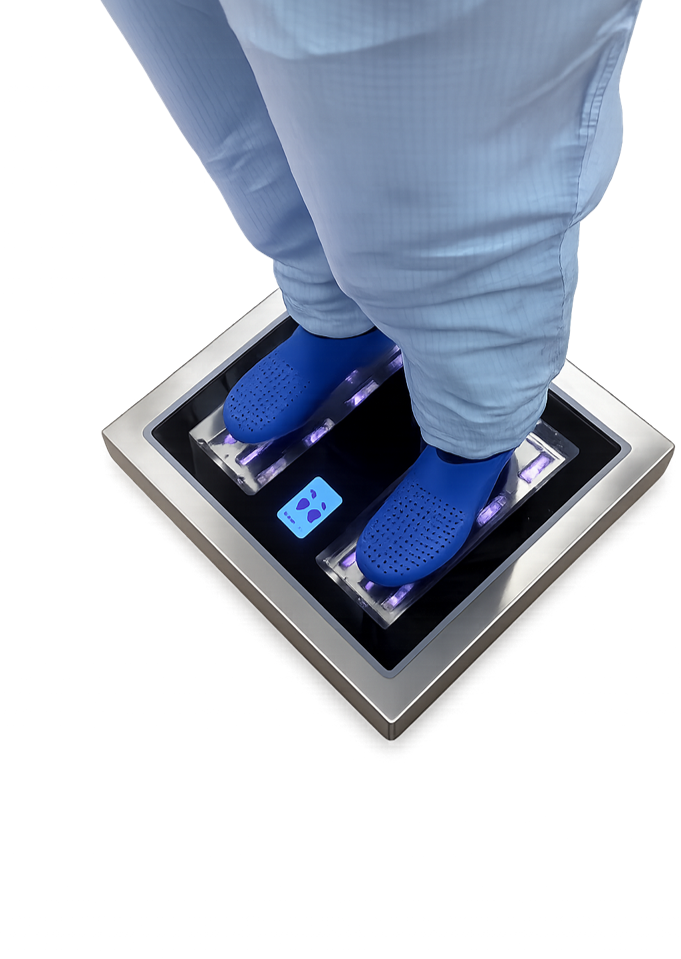
UV222 Step-On
Footwear outsole decontamination at critical entry points.
Material transfer
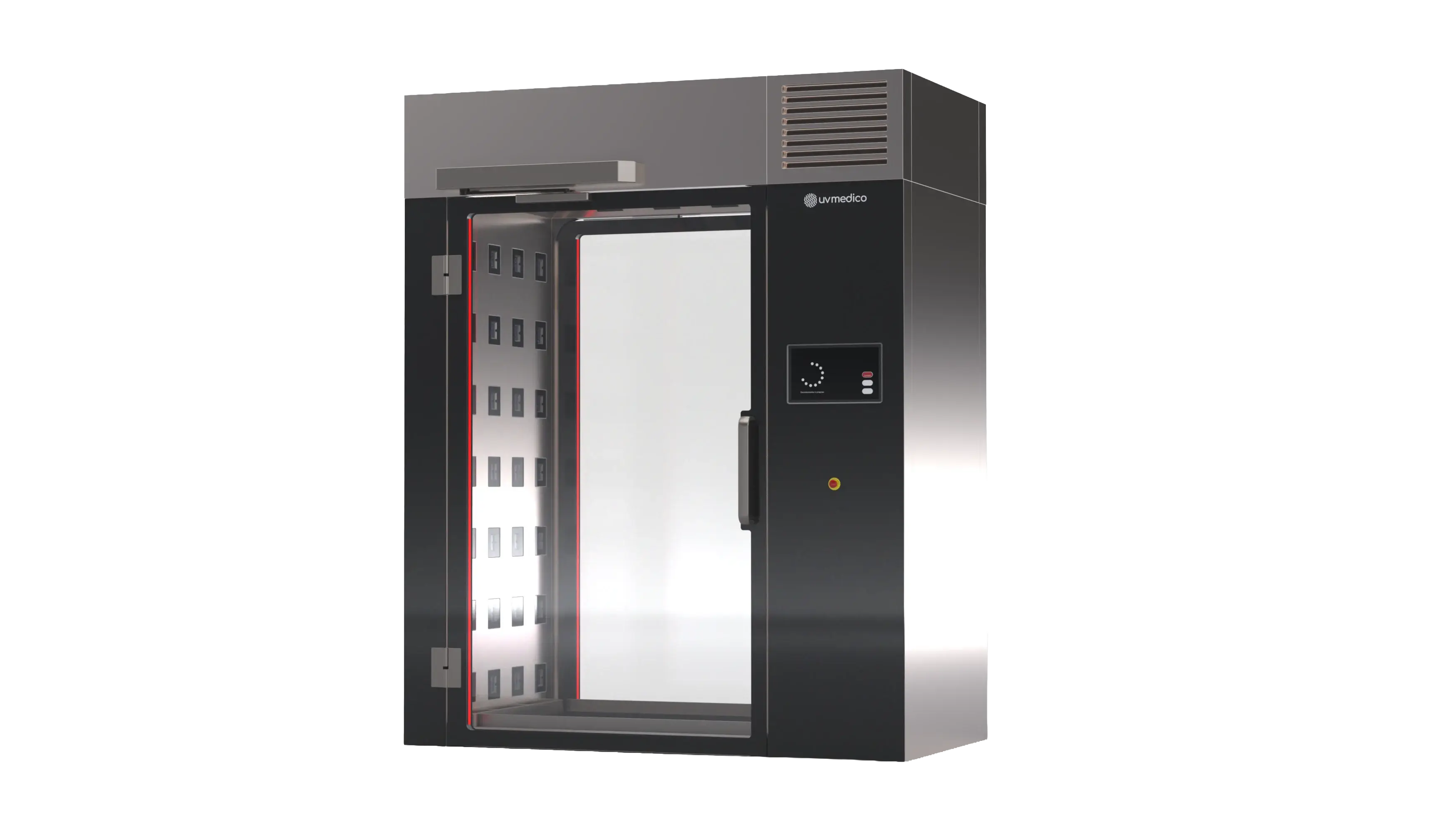
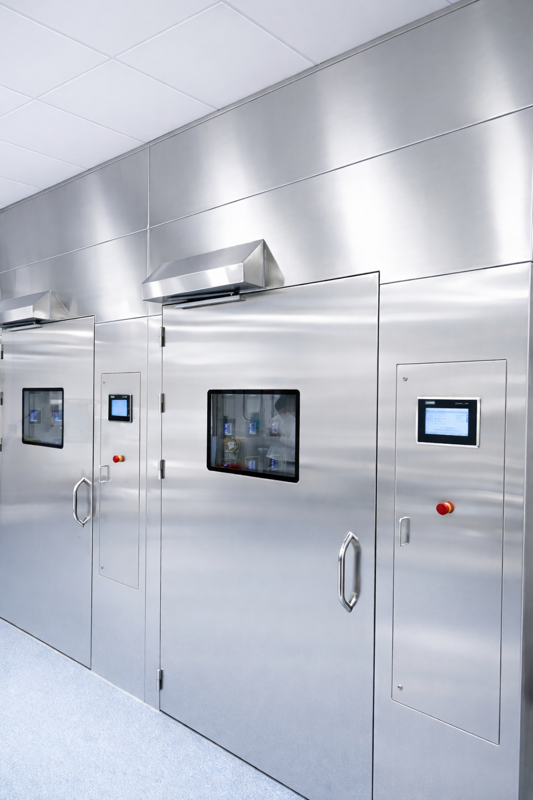
UV222 Material Airlock
Tools, equipment and vessels before they enter a higher grade.
Material transfer
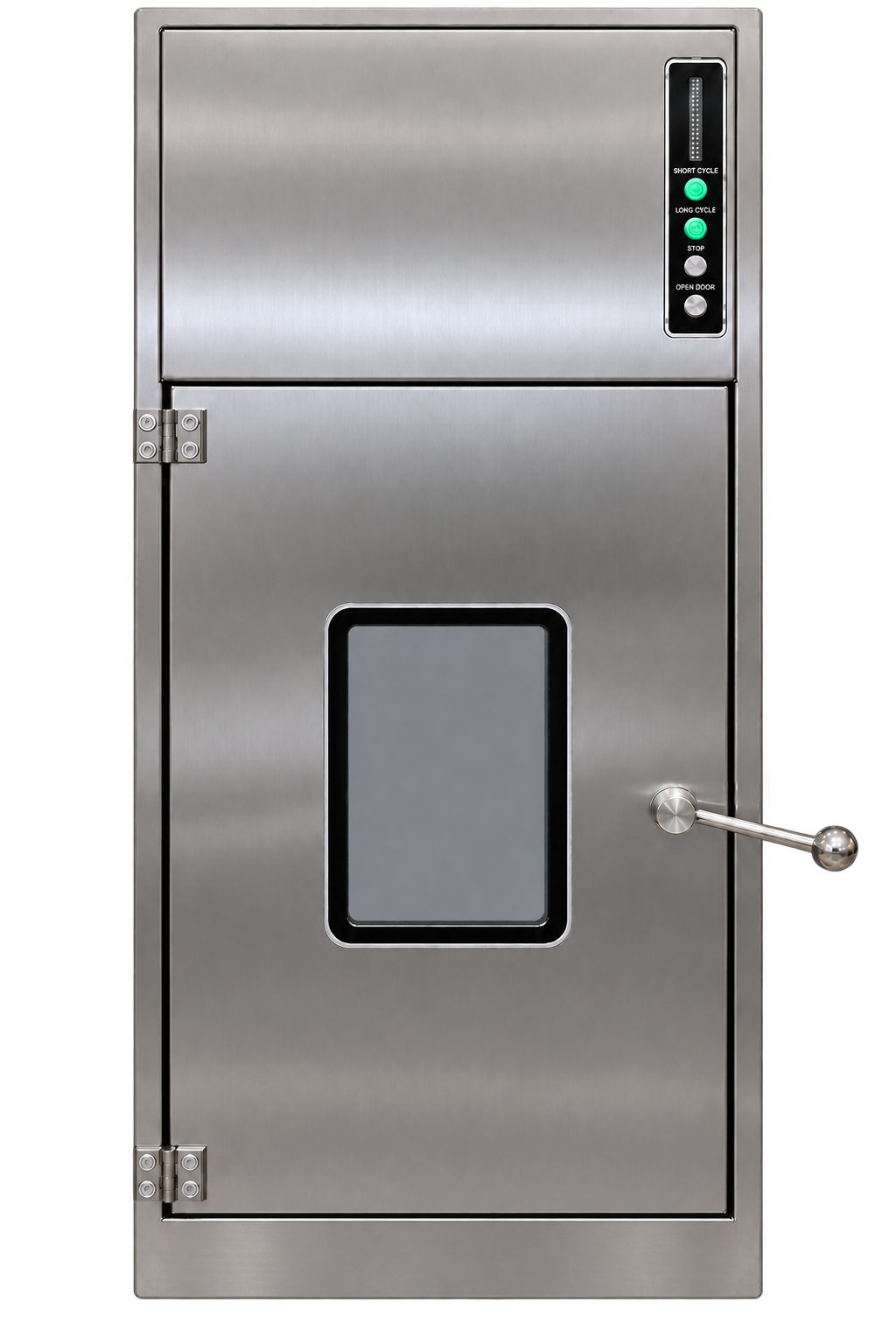
UV222 Pass-Through Box
Smaller items passed between cleanroom grades with programmable cycles.
General areas
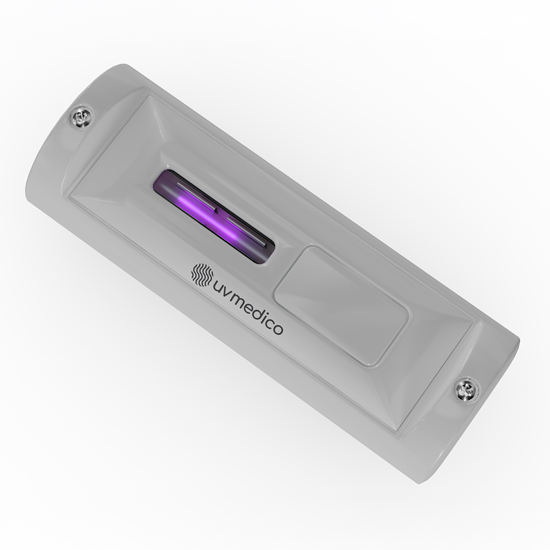
UV222 Cleanroom Downlight
Ceiling-mounted air and surface decontamination in production areas, change rooms and corridors.
General areas
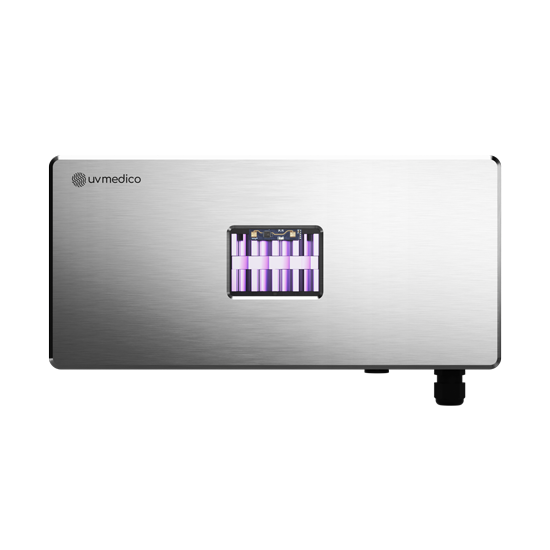
UV222 Dual Downlight 60x60
Fits standard 60x60 ceiling grids in production areas, change rooms and other general areas.
General areas and filling lines
Vertex 222
Mobile unit for production areas and change rooms, and for use at filling lines.
01 · Personnel entry Patent pending
Gown decontamination in 20 seconds before cleanroom entry
Operators are the largest contamination source in most cleanrooms, and microorganisms can remain on gowns even after correct gowning. The UV222 Booth reduces this bioburden at the last step before entry. The UV222 Wall does the same where floor space is tight.
*Calculated for the UV222 Booth from published far-UVC dose data (Hessling et al., 2021). Each facility confirms performance under its own conditions.
02 · Footwear Patent pending
Reduce bioburden on cleanroom footwear, not just particles
Shoe soles carry bioburden from zone to zone. Adhesive mats capture particles but do not inactivate microorganisms. The UV222 Step-On decontaminates the outsole while the operator stands on it, and complements gown decontamination at personnel entry.
03 · Material transfer Patent pending
Reduce surface bioburden during equipment transfer
Equipment moving between zones is one of the hardest transfers to control. The UV222 Material Airlock decontaminates tools, equipment and vessels before they enter a higher grade, reducing manual wiping. For smaller items, the UV222 Pass-Through Box is built to your size and HEPA requirements.
04 · Production and general areas Patent pending
Continuous microbial reduction in occupied areas
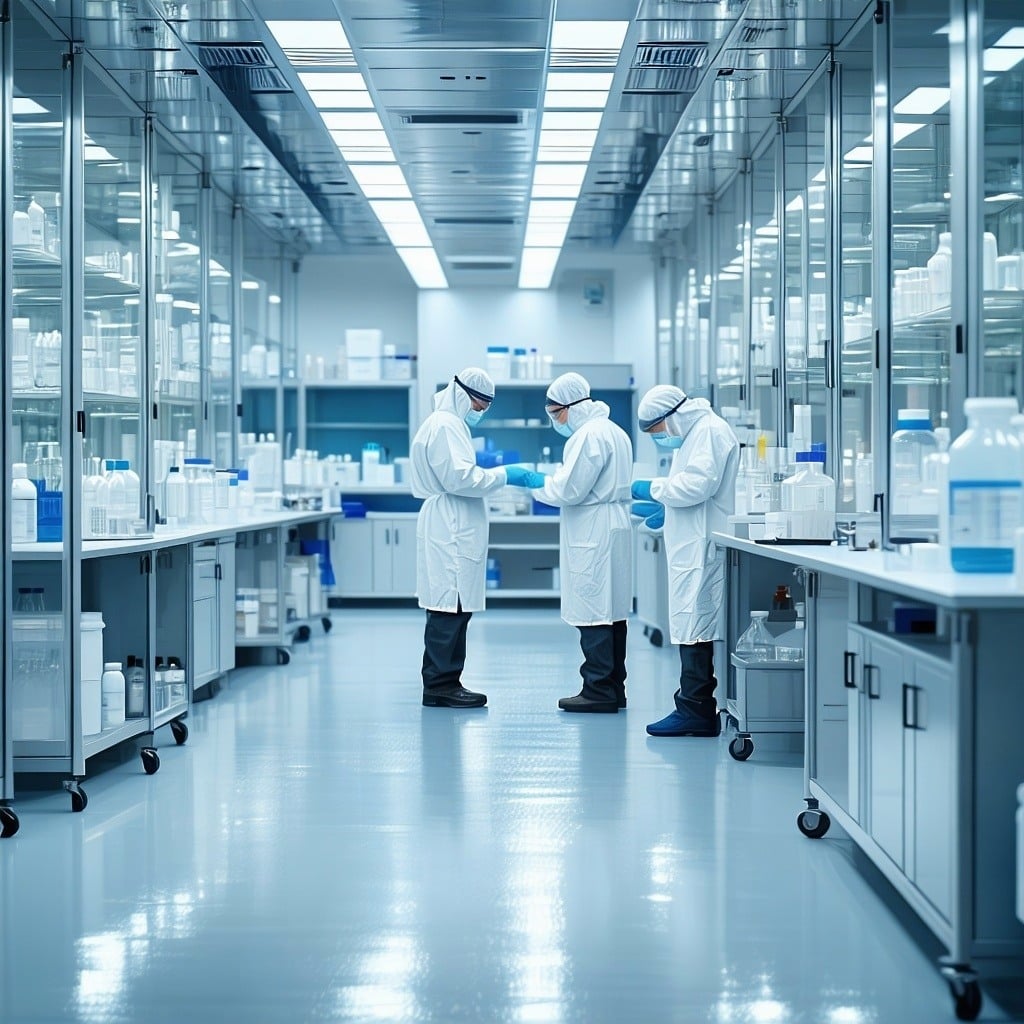
Far-UVC downlights decontaminate air and surfaces in production areas and change rooms, between scheduled cleaning and with operators present. The UV222 Cleanroom Downlight fits flush in cleanroom ceilings, and the UV222 Dual Downlight 60x60 combines visible LED lighting and far-UVC in one luminaire that replaces standard 60x60 fittings. The mobile, wide-angle Vertex 222 covers areas without a fixed installation.
05 · Filling lines Patent pending
Mobile far-UVC at the filling line during service
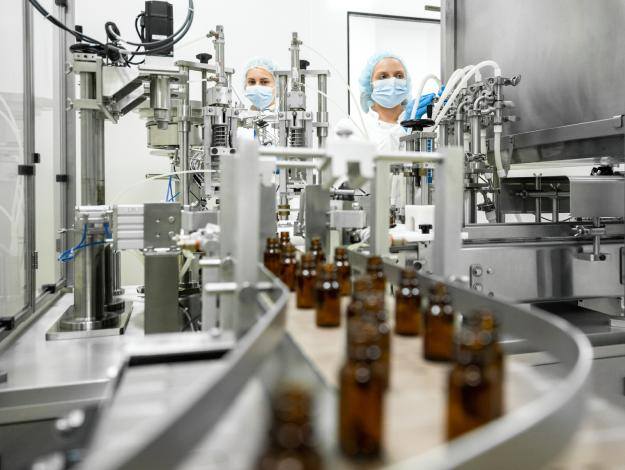
Service and maintenance open up the filling line and bring people and tools into the critical zone. The mobile Vertex 222 is positioned at the line during these interventions, adding air and surface decontamination while technicians work, then moves on to the next line.
Proven in practice
Real-world installations and industry awards
UV222 in pharmaceutical cleanrooms, from personnel entry to material transfer.
Sanofi · Material transfer
UV222 Material Airlock
360° far-UVC decontamination of equipment moving between clean areas.
Read the Sanofi Material Airlock case →European pharma · Grade B entry
UV222 Wall at personnel entry
Wall-mounted gown decontamination after gowning, installed in an existing (brownfield) cleanroom.
Read the Grade B entry case →INTERPHEX 2026 · New York
Editor’s Choice Award
Awarded to the UV222 Dual Downlight 60x60 for far-UVC cleanroom innovation.
Read about the INTERPHEX award →The science
How filtered 222 nm far-UVC works
Filtered 222 nm far-UVC inactivates microorganisms in the air and on surfaces, and operates within international exposure limits while operators are present.
222 nm wavelength
Damages microbial DNA and RNA, so treated microorganisms lose the ability to replicate. This reduces bioburden in air and on surfaces.
Operators present
Absorbed in the outer, non-living layers of skin and the tear film of the eye. Cycles stay within ACGIH / ICNIRP limits, in line with ISO 15858 and IEC 62471.
Air and surfaces
Continuous, duty-cycle or motion-activated operation, set per area by process risk. In a peer-reviewed room-sized chamber study at the ACGIH skin limit, far-UVC reduced airborne Staphylococcus aureus by over 98%, equivalent to 184 additional air changes per hour (Eadie et al., 2022, Scientific Reports).
Mercury-free KrCl lamp
No mercury, ozone below applicable occupational exposure limits, and 17,500+ hours of lamp life. Read more about mercury-free KrCl lamps
or read about safety standards and compliance
Next step
Evaluating far-UVC at your site
Each facility validates a UV222 step under its own conditions. A typical evaluation has four parts.
1
Gown sampling
Contact plates before and after a cycle, including folds and the back of the gown.
2
Your conditions
Your garments, gowning procedure and operator flow, not laboratory conditions.
3
Trend data
Environmental monitoring results and excursions before and after installation.
4
Risk assessment
The step placed in your Contamination Control Strategy (CCS) together with the exposure assessment.
Our Danish R&D and application team, with expertise in photonics, microbiology and electronics, reviews your layout, workflow and contamination risks, and proposes where far-UVC fits.
Questions
Far-UVC in cleanrooms: frequently asked questions
What is far-UVC?
Far-UVC is the 200 to 230 nm part of the germicidal UV-C band. UV222 systems use filtered 222 nm far-UVC to inactivate bacteria, viruses and fungi in the air and on exposed surfaces, and are designed for use in occupied areas within ACGIH / ICNIRP exposure limits.
Is far-UVC safe around operators?
At 222 nm, the light is absorbed in the non-living outer layer of the skin and in the tear film and outermost layer of the cornea, so very little reaches the living cells beneath. This is what makes operation in occupied cleanrooms possible. Compliance with the exposure limit is ensured by the integral optical filter, the built-in safety control and an installation-specific exposure assessment, confirmed by measurement during commissioning.
Why 222 nm and not 254 nm UV-C?
254 nm UV-C penetrates deeper into skin and eyes, so it is limited to unoccupied spaces. Filtered 222 nm far-UVC can be used in occupied areas within applicable exposure limits.
We already clean and disinfect. Why add far-UVC?
Cleaning and disinfection remain essential. The gap is what happens between them: operators, materials and equipment reintroduce microorganisms after each cleaning cycle. UV222 complements gowning, cleaning and environmental monitoring by continuously inactivating airborne and surface microorganisms, helping keep bioburden lower between interventions.
How does far-UVC fit into an EU GMP Annex 1 Contamination Control Strategy?
EU GMP Annex 1 requires a Contamination Control Strategy (CCS) that covers all contamination sources, including personnel, materials and equipment. A far-UVC step can be added at specific points, such as personnel entry or material transfer, as a documented risk-reduction measure. It complements gowning, cleaning and environmental monitoring rather than replacing them.
Does UV222 produce ozone?
Very little. The 222 nm light produces small amounts of ozone in the surrounding air. At the fixture density UV Medico specifies, with normal ventilation, measured levels stay well below applicable occupational exposure limits, which vary by country and region. In small or enclosed spaces, ozone is included in the installation-specific assessment.
Will microorganisms become resistant to far-UVC?
No acquired resistance to 222 nm has been demonstrated. Because 222 nm damages nucleic acids and proteins directly rather than acting on a single molecular target, resistance of the kind seen with antibiotics is not expected. Susceptibility varies between organisms: bacterial spores and some fungi need higher doses.
Does far-UVC damage cleanroom materials?
Filtered 222 nm far-UVC has shown compatibility with a broad range of common cleanroom and pharmaceutical materials under validated operating conditions. It leaves no chemical residue and produces minimal heat.
Is the UV222 Booth or UV222 Wall an air shower?
No. It inactivates microorganisms on gown surfaces with light. It does not remove particles.
Has far-UVC been used in real GMP environments?
Yes. UV222 systems are deployed in live environments with strict contamination-control requirements, including pharmaceutical cleanrooms and operating theatres, with more than 13,000 fixtures installed worldwide. Customer EM data is confidential, and each facility validates the step for its specific installation and use case.
How long do the lamps last, and is there a warranty?
UV222 lamps have a rated life of 17,500 hours, roughly two years of continuous operation and longer on a duty cycle. Lamp replacement is the only routine service item. UV Medico provides a two-year warranty on the system.