

Aarhus University Hospital

Case Study · Aarhus University Hospital · Denmark

Can far-UVC protect a hospital waiting room?

Challenge

Hospital waiting rooms concentrate sick and vulnerable people — a constant source of airborne and surface contamination.

Approach

UV222™ far-UVC in the Respiratory Disease Department waiting room, running autonomously in active wards since 2021.

Result

A ~70% reduction in surface bioburden — continuous protection with no change to the clinic’s routine.

The Challenge

A waiting room full of respiratory patients

The waiting room of a Respiratory Disease Department is one of the highest-risk shared spaces in a hospital.

Patients with respiratory illness gather there for long periods, and surfaces and air carry a steady contamination load. Routine cleaning helps, but it can’t run continuously while the room is in use.
The Approach

Autonomous far-UVC in an active ward

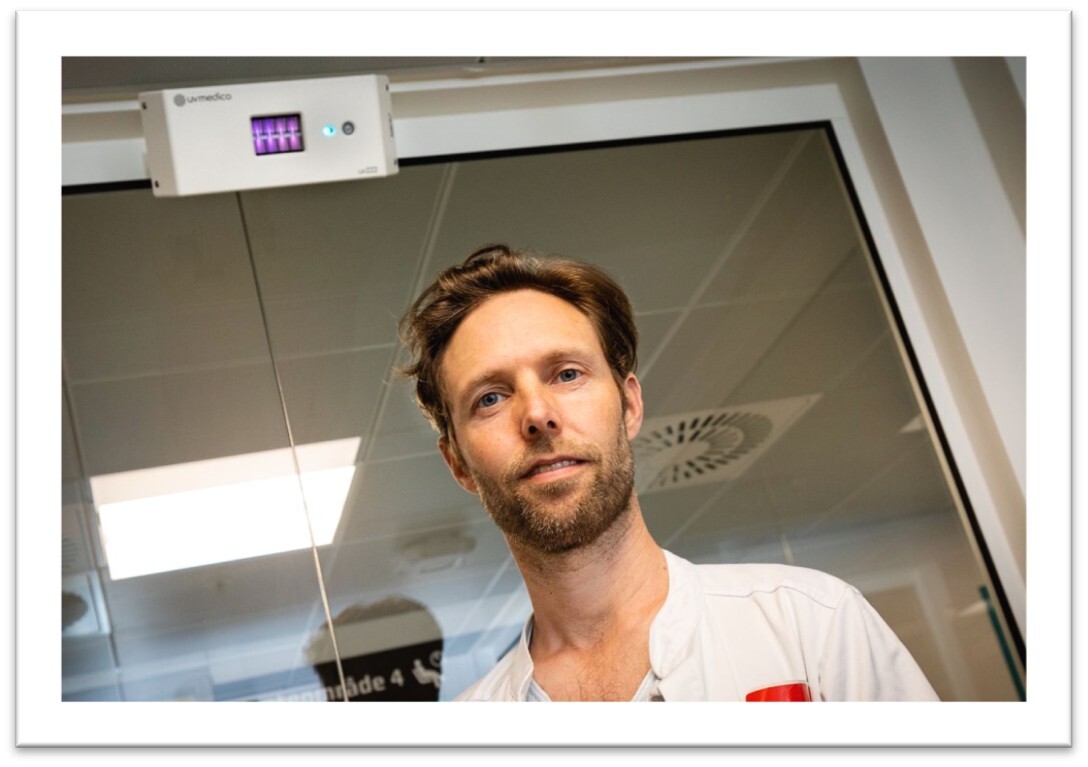
Aarhus University Hospital installed UV222™ far-UVC in the department’s waiting room.

The human-safe 222 nm light has run autonomously in active wards since 2021, continuously disinfecting air and surfaces in occupied space — without interrupting patients or staff.

A UV222 unit installed above a doorway at Aarhus University Hospital
A UV222 unit running above the waiting-room doorway at Aarhus University Hospital.

The Result

~70% less surface bioburden

Surface bioburden in the waiting room fell by roughly 70%.

Achieved during normal operation and sustained over years of autonomous use — a continuous layer of infection prevention in one of the hospital’s busiest shared spaces.

“~70% less surface bioburden — running quietly in an active ward since 2021.”

Want the full data?

A detailed report with methodology and results can be linked here.

#">Read the full report

Far-UVC for your hospital?

Talk to our team about UV222 for clinical and shared spaces. Full references available on request.

Contact Us